
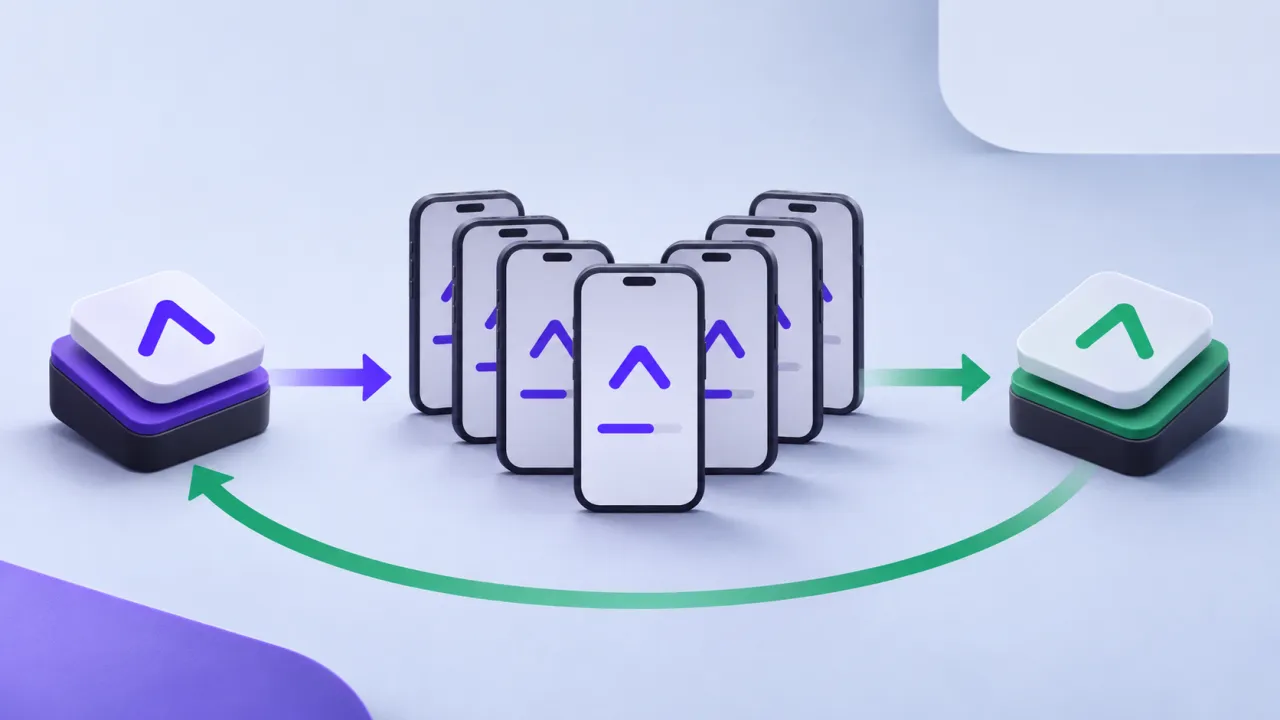
An over-the-air update is constrained by the native runtime already installed on the device. A JavaScript change that expects a new native capability cannot become compatible merely because it was delivered successfully. Rollback planning should begin with runtime compatibility and the behavior of data written by the new release.
The contract to define first
Use the release system’s supported runtime and channel mechanisms, and verify their current behavior in official documentation. Keep a known recoverable update and test a representative installed build. Treat data migrations separately: reverting code does not automatically undo a persisted schema or a server-side action introduced by that code.
A worked scenario
A synthetic update begins storing a new preference format. Rolling back the JavaScript to an older version may leave that format behind. The release plan should prove that the old code can tolerate it, or specify a compatible migration path before wider rollout.
An implementation and review sequence
- Record runtime compatibility and the targeted channel
- Test rollback on a real installed build
- Review persistent data changes independently of code changes
Failure cases worth testing
| Condition or input | Expected behavior |
|---|---|
| Update requires an unavailable native module | It is not delivered as compatible |
| Code rolls back after a data write | The previous release can still interpret stored state |
| A release is promoted | The exact tested artifact is identifiable |
Download the illustrative acceptance checklist (JSON)
Tradeoffs and limits
Very frequent updates can reduce time to fix while increasing release-management complexity. A controlled rollout with observable acceptance criteria is more useful than speed without recovery evidence.
Use the result to make a decision
The practical output is straightforward: build runtime compatibility and staged release acceptance checks. Keep the assumptions with the artifact so a product owner, implementer or prospective partner can review the same decision. A useful handoff states the supported scope, the evidence collected and the remaining dependency instead of treating a successful demonstration as proof of every operating condition.
Continue with related implementation detail
Related guide: A release pipeline a small product team can understand.
React Native account switching cache leaks
References and current platform requirements
Platform capabilities, programme terms and access conditions can change. Check the linked primary references against the version and account you actually use; the patterns above do not establish a provider approval, certification or universal compatibility guarantee.
Discuss the workflow
Bring the affected device, release version, and a reproducible workflow for a scoped mobile discussion.
Explore the relevant AptixLabs service
What should an OTA rollback plan cover?
An over-the-air update is constrained by the native runtime already installed on the device. Very frequent updates can reduce time to fix while increasing release-management complexity.
Which failure cases should be included in the review?
Include these explicit cases: Update requires an unavailable native module: it is not delivered as compatible; Code rolls back after a data write: the previous release can still interpret stored state; A release is promoted: the exact tested artifact is identifiable.