
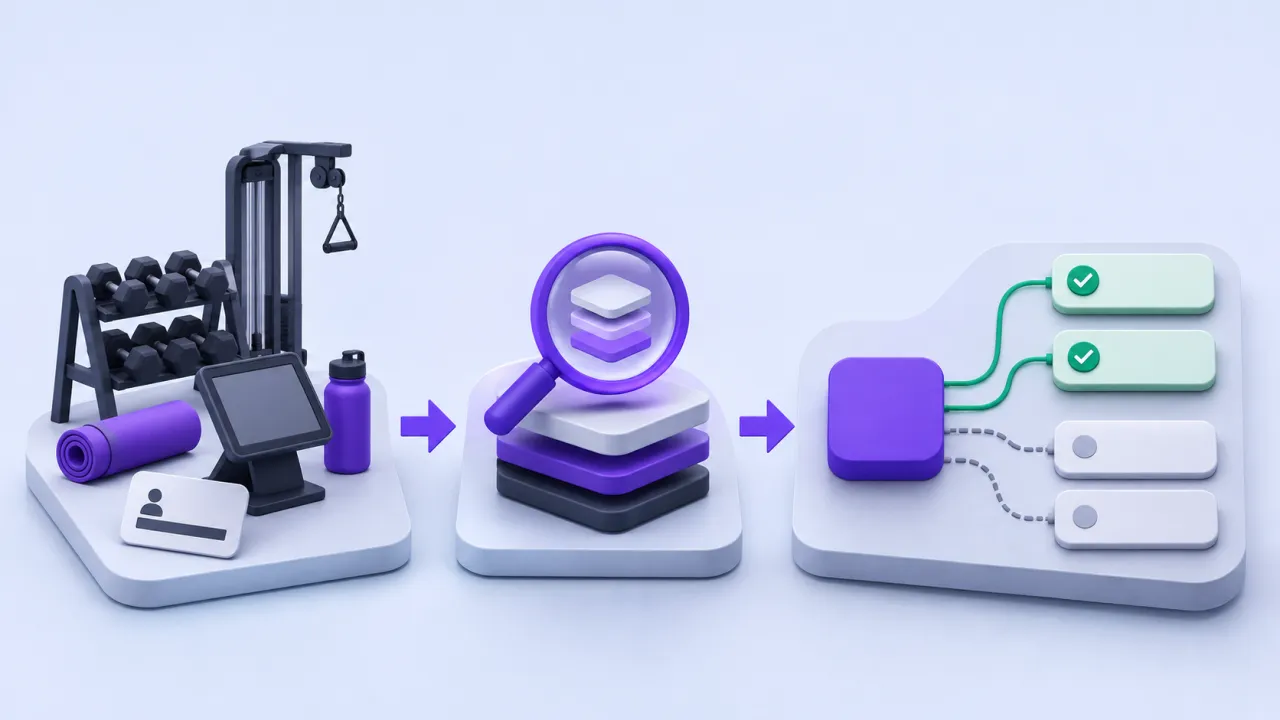
Gym software integration begins with discovery because membership, access control, scheduling and coaching may live in different systems. A provider logo on a website does not establish API access or compatibility. Inventory the actual workflows and account permissions before promising a connection.
The contract to define first
Record the source of truth for each object, the available API or export mechanism and the update direction. Check quotas, webhook behavior and sandbox availability using the relevant provider’s current documentation. Decide who resolves conflicts and whether staff need a manual fallback when one system is unavailable.
A worked scenario
A hypothetical gym wants member status to determine coaching access. The integration must explain what happens when a membership pauses, a payment status changes late or an administrator corrects the record. A one-time CSV import does not solve the ongoing lifecycle.
An implementation and review sequence
- Inventory systems objects and authoritative owners
- Verify actual provider access and update mechanisms
- Define reconciliation and a staff fallback
Failure cases worth testing
| Condition or input | Expected behavior |
|---|---|
| Membership status arrives late | Access follows the agreed reconciliation policy |
| Provider API is unavailable | Staff have a documented fallback |
| Two systems disagree | An explicit source-of-truth rule resolves the conflict |
Download the illustrative acceptance checklist (JSON)
Tradeoffs and limits
Real-time synchronization is not always necessary. A scheduled reconciliation with clear limits may be sufficient for some workflows and easier for the gym to operate.
Use the result to make a decision
The practical output is straightforward: prepare an integration inventory before promising compatibility. Keep the assumptions with the artifact so a product owner, implementer or prospective partner can review the same decision. A useful handoff states the supported scope, the evidence collected and the remaining dependency instead of treating a successful demonstration as proof of every operating condition.
Continue with related implementation detail
Related guide: A digital coaching pilot for gyms: one cohort, one clear decision
Coach marketplace verification workflow
Fitness API partnership proposal
References and current platform requirements
AWS: SaaS integration overview
Trainerize: integration use cases
The linked references provide platform or process context. The worked scenario and acceptance matrix are original examples; adapt them to the actual product, supported environment and documented responsibilities.
Discuss the workflow
Propose a bounded UltraFit360 collaboration with audience, scope, owners, and pilot acceptance criteria.
Explore the relevant AptixLabs service
Discuss a proposed partnership
What should a gym verify before integrating software?
Gym software integration begins with discovery because membership, access control, scheduling and coaching may live in different systems. Real-time synchronization is not always necessary.
Which failure cases should be included in the review?
Include these explicit cases: Membership status arrives late: access follows the agreed reconciliation policy; Provider API is unavailable: staff have a documented fallback; Two systems disagree: an explicit source-of-truth rule resolves the conflict.