
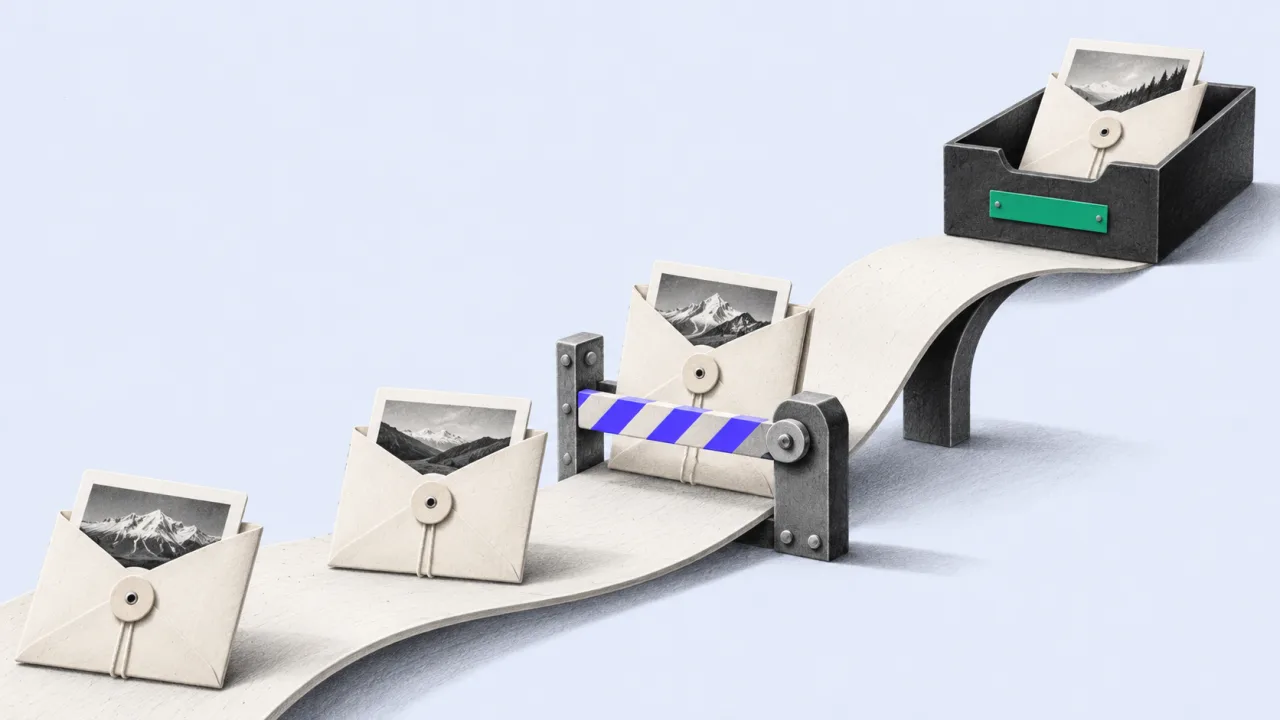
Background uploads need a durable task model because mobile applications can lose connectivity, move to the background or be terminated. A progress indicator tied only to an in-memory request cannot explain what happened after the app restarts. Treat the upload as a recoverable operation with a stable identity.
The contract to define first
Persist the local asset reference, intended destination, ownership and task state using the platform mechanisms appropriate to the app. Revalidate authentication before resuming and handle local files that no longer exist. Distinguish a completed object upload from the later record that makes it visible in the product. Avoid presenting a partially committed workflow as finished.
A worked scenario
A synthetic progress-photo upload reaches storage but the final metadata request fails. Retrying the whole flow with a new identity can create duplicate objects. Reconciliation should find the existing object or clean up abandoned material under a defined retention policy.
An implementation and review sequence
- Persist task identity and the local asset reference
- Separate transfer from final metadata commitment
- Reconcile partial completion before retrying
Failure cases worth testing
| Condition or input | Expected behavior |
|---|---|
| App restarts during upload | The task has a recoverable state |
| Local file was removed | Explain the problem without endless retries |
| Object exists but metadata is missing | Reconcile or clean up the orphan |
Download the illustrative acceptance checklist (JSON)
Tradeoffs and limits
Durable background transfer adds platform-specific behavior. If uninterrupted background completion is unnecessary, a transparent paused state and foreground resume may be the better initial product contract.
Use the result to make a decision
The practical output is straightforward: design persisted photo-upload states and recoverable failures. Keep the assumptions with the artifact so a product owner, implementer or prospective partner can review the same decision. A useful handoff states the supported scope, the evidence collected and the remaining dependency instead of treating a successful demonstration as proof of every operating condition.
Continue with related implementation detail
Related guide: Offline access needs explicit rules for reading and writing.
App subscription entitlement reconciliation
References and current platform requirements
Platform capabilities, programme terms and access conditions can change. Check the linked primary references against the version and account you actually use; the patterns above do not establish a provider approval, certification or universal compatibility guarantee.
Discuss the workflow
Bring the affected device, release version, and a reproducible workflow for a scoped mobile discussion.
Explore the relevant AptixLabs service
How should a mobile upload recover after interruption?
Background uploads need a durable task model because mobile applications can lose connectivity, move to the background or be terminated. Durable background transfer adds platform-specific behavior.
Which failure cases should be included in the review?
Include these explicit cases: App restarts during upload: the task has a recoverable state; Local file was removed: explain the problem without endless retries; Object exists but metadata is missing: reconcile or clean up the orphan.