
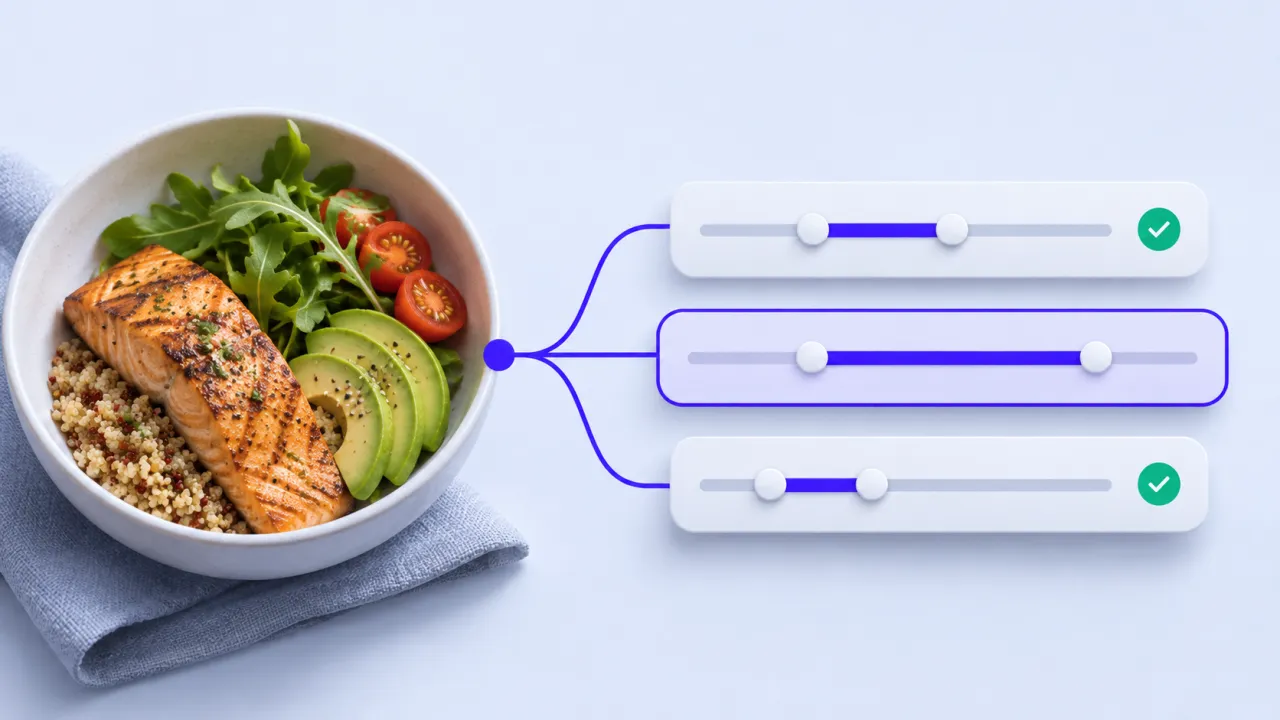
A food photograph can support an estimate, but it does not reveal exact ingredients or portion weights. Nutrition logging interfaces should make uncertainty editable rather than turning an uncertain inference into a precise-looking fact. The correction workflow matters as much as the first generated result.
The contract to define first
Separate recognized items, assumed portions and calculated nutrients. Let the user change the ingredient, amount or preparation and then recompute the result. Preserve whether values came from a catalog, a label or an estimate. Avoid decimal precision that suggests a measurement the app never made, and do not present general nutrition estimates as individualized medical advice.
A worked scenario
A synthetic meal contains rice, vegetables and an unknown sauce. The system can propose entries while clearly identifying the uncertain component. If the user changes the portion, all dependent totals should update consistently instead of leaving the displayed meal and daily summary out of sync.
An implementation and review sequence
- Expose the assumptions behind the estimated meal
- Support portion and ingredient corrections
- Recompute all dependent summaries after edits
Failure cases worth testing
| Condition or input | Expected behavior |
|---|---|
| A portion changes | Meal and daily totals update together |
| An ingredient is unidentified | The uncertainty is visible rather than invented |
| User saves an estimate | Its estimated origin remains distinguishable |
Download the illustrative acceptance checklist (JSON)
Tradeoffs and limits
Showing every uncertainty at once can make logging slow. Prioritize corrections that materially affect the result and keep the assumptions accessible without overwhelming the primary task.
Use the result to make a decision
The practical output is straightforward: display estimates and corrections instead of false precision. Keep the assumptions with the artifact so a product owner, implementer or prospective partner can review the same decision. A useful handoff states the supported scope, the evidence collected and the remaining dependency instead of treating a successful demonstration as proof of every operating condition.
Continue with related implementation detail
Related guide: Building a coaching platform where AI and human coaches work together
Exercise form feedback limitations
Client onboarding questionnaires and consent
References and current platform requirements
Android: health and fitness app design
The linked references provide platform or process context. The worked scenario and acceptance matrix are original examples; adapt them to the actual product, supported environment and documented responsibilities.
Discuss the workflow
Map one coach-to-client workflow with AptixLabs before expanding the feature list.
Explore the relevant AptixLabs service
How should a food logger communicate uncertain estimates?
A food photograph can support an estimate, but it does not reveal exact ingredients or portion weights. Showing every uncertainty at once can make logging slow.
Which failure cases should be included in the review?
Include these explicit cases: A portion changes: meal and daily totals update together; An ingredient is unidentified: the uncertainty is visible rather than invented; User saves an estimate: its estimated origin remains distinguishable.