
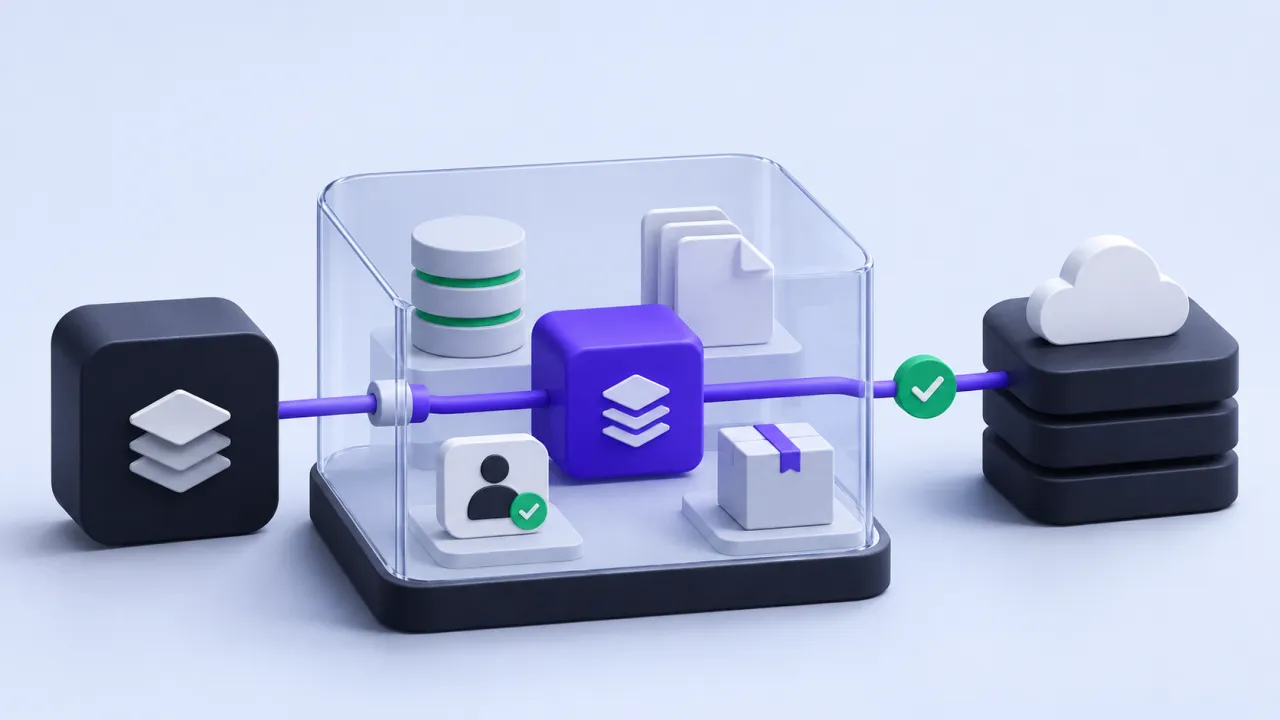
A partner sandbox should let another team test meaningful integration behavior without accessing real customer data. A successful happy-path request is not enough. Partners also need predictable authorization failures, duplicate events, rate limits and lifecycle changes to understand the contract they are implementing.
The contract to define first
Use synthetic fixtures and clearly separate sandbox credentials and destinations from production. Define reset behavior, versioning and supported scenarios. Keep the sandbox representative without promising that its scale or timing exactly matches production. Provide a way to identify requests so both teams can debug an issue without exchanging personal records.
A worked scenario
A hypothetical partner tests membership changes using a small fixed dataset. The sandbox should let them pause a member, replay an event and simulate denied access. If every request always succeeds immediately, the partner cannot develop a reliable reconciliation path.
An implementation and review sequence
- Provide synthetic fixtures for core lifecycle and failure cases
- Separate credentials destinations and reset behavior
- Document differences from production explicitly
Failure cases worth testing
| Condition or input | Expected behavior |
|---|---|
| Partner replays an event | The sandbox demonstrates the contract’s replay behavior |
| A test credential reaches production | The environment boundary prevents access |
| Fixtures reset | Partners can identify the reset and recover their tests |
Download the illustrative acceptance checklist (JSON)
Tradeoffs and limits
A fully featured sandbox has maintenance cost. A smaller deterministic environment with explicit limitations can be more useful than a large unstable imitation of production.
Use the result to make a decision
The practical output is straightforward: define synthetic data rate limits and test credentials lifecycle. Keep the assumptions with the artifact so a product owner, implementer or prospective partner can review the same decision. A useful handoff states the supported scope, the evidence collected and the remaining dependency instead of treating a successful demonstration as proof of every operating condition.
Continue with related implementation detail
Related guide: Wearable partnerships: the integration evidence to bring to the table
Fitness API partnership proposal
Software maintenance handover checklist
References and current platform requirements
AWS: SaaS integration overview
Trainerize: integration use cases
The linked references provide platform or process context. The worked scenario and acceptance matrix are original examples; adapt them to the actual product, supported environment and documented responsibilities.
Discuss the workflow
Propose a bounded UltraFit360 collaboration with audience, scope, owners, and pilot acceptance criteria.
Explore the relevant AptixLabs service
Discuss a proposed partnership
Which failure cases should a partner sandbox support?
A partner sandbox should let another team test meaningful integration behavior without accessing real customer data. A fully featured sandbox has maintenance cost.
Which failure cases should be included in the review?
Include these explicit cases: Partner replays an event: the sandbox demonstrates the contract’s replay behavior; A test credential reaches production: the environment boundary prevents access; Fixtures reset: partners can identify the reset and recover their tests.