
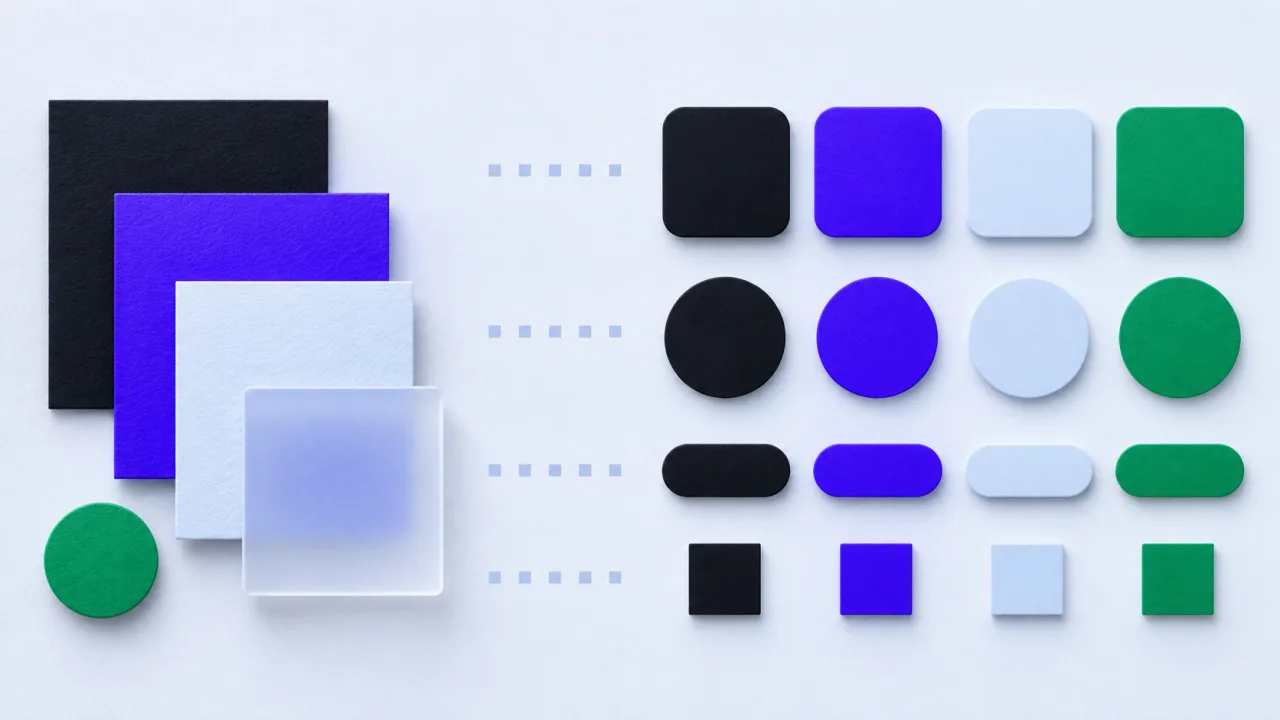
A design token is a shared meaning, not simply a hex value copied from Figma. If a button color represents a primary action, that semantic role should survive a theme change. A useful mapping connects design variables to named code tokens and specifies how changes are reviewed.
The contract to define first
Separate primitive values from semantic roles and component-level choices. Record aliases, units and supported modes. Generate or maintain typed code references using the existing design-system conventions, and avoid replacing every repeated number automatically. Some values are deliberate local exceptions; review them before expanding the shared token surface.
A worked scenario
A synthetic dashboard uses a semantic surface token that resolves differently in two modes. The code should reference the role rather than the current color value. A token audit can then identify a hardcoded value that bypasses the intended mode behavior.
An implementation and review sequence
- Inventory primitive semantic and component decisions
- Document aliases units and theme modes
- Validate a representative component after token changes
Failure cases worth testing
| Condition or input | Expected behavior |
|---|---|
| A semantic alias changes | Consumers update without manual color replacement |
| An unsupported mode is selected | The fallback is explicit |
| A local exception appears | It is reviewed rather than blindly promoted to a token |
Download the illustrative acceptance checklist (JSON)
Tradeoffs and limits
An enormous token catalog can make simple changes harder. Start with recurring decisions that matter to consistency, and expand when a real component or mode requires it.
Where our product work provides context
AptixLabs’ website already uses named surface, ink, brand and typography tokens in its CSS design system. Those existing roles provide a practical starting point for a Figma mapping. The next step is an inspectable contract, not replacing the current theme with a second parallel set of values.
Use the result to make a decision
The practical output is straightforward: create a token mapping contract with semantic names and dark-mode states. Keep the assumptions with the artifact so a product owner, implementer or prospective partner can review the same decision. A useful handoff states the supported scope, the evidence collected and the remaining dependency instead of treating a successful demonstration as proof of every operating condition.
Continue with related implementation detail
Related guide: Design handoff should include states and constraints.
Figma Code Connect component mapping
Figma MCP implementation acceptance tests
References and current platform requirements
Figma: MCP server documentation
Figma: connecting React components
The linked references provide platform or process context. The worked scenario and acceptance matrix are original examples; adapt them to the actual product, supported environment and documented responsibilities.
Discuss the workflow
Bring a representative Figma flow and its component states to scope a design-to-code engagement.
Explore the relevant AptixLabs service
What makes a design token semantic?
A design token is a shared meaning, not simply a hex value copied from Figma. An enormous token catalog can make simple changes harder.
Which failure cases should be included in the review?
Include these explicit cases: A semantic alias changes: consumers update without manual color replacement; An unsupported mode is selected: the fallback is explicit; A local exception appears: it is reviewed rather than blindly promoted to a token.