
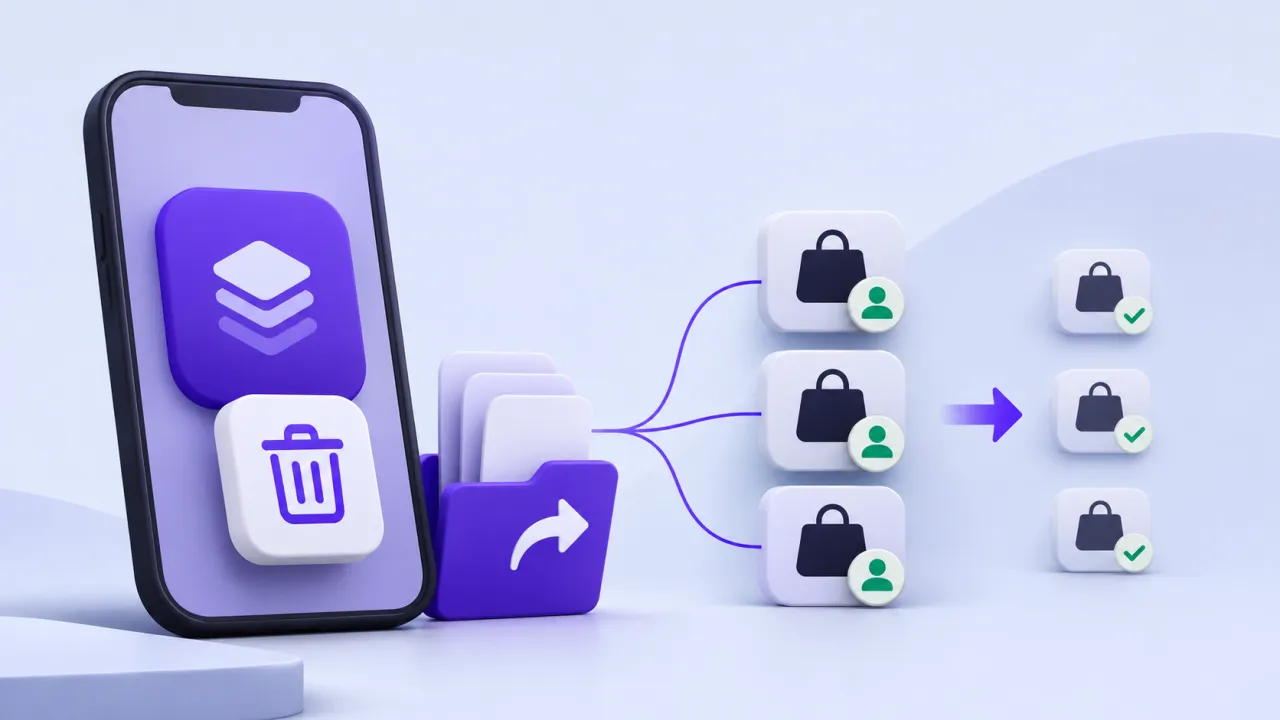
An account-deletion button is the beginning of a data-lifecycle workflow. Information may exist in authentication, databases, object storage, logs, analytics and backups. A product should define what deletion means for each store and communicate any retention exceptions accurately rather than promising instant disappearance everywhere.
The contract to define first
Inventory the data tied to an account and identify which dependencies require ordered removal. Reauthenticate where appropriate, prevent new writes during deletion and record progress without retaining unnecessary personal detail. Keep export and deletion separate: a user should understand whether an export is available before removal and how its temporary download is protected.
A worked scenario
A synthetic account has uploaded photos and pending background jobs. Deleting the profile row alone leaves objects and tasks behind. The workflow should stop new jobs, remove or detach records according to policy, and reconcile retries when one dependency is unavailable.
An implementation and review sequence
- Map account-linked data stores and retention rules
- Make deletion a recoverable state machine
- Protect any temporary export and its expiry
Failure cases worth testing
| Condition or input | Expected behavior |
|---|---|
| A deletion worker retries | Already removed records do not cause corruption |
| A queued job runs after deletion starts | It cannot recreate removed user data |
| Export link expires | The download is no longer available through that link |
Download the illustrative acceptance checklist (JSON)
Tradeoffs and limits
Some records may have required retention or backup-lifecycle constraints. Those decisions need qualified review; engineering should implement the documented policy rather than inventing universal legal deadlines.
Use the result to make a decision
The practical output is straightforward: create a deletion dependency inventory and user-visible status flow. Keep the assumptions with the artifact so a product owner, implementer or prospective partner can review the same decision. A useful handoff states the supported scope, the evidence collected and the remaining dependency instead of treating a successful demonstration as proof of every operating condition.
Continue with related implementation detail
Related guide: Health-product security claims need evidence.
Mobile crash symbolication guide
App subscription entitlement reconciliation
References and current platform requirements
Platform capabilities, programme terms and access conditions can change. Check the linked primary references against the version and account you actually use; the patterns above do not establish a provider approval, certification or universal compatibility guarantee.
Discuss the workflow
Bring the affected device, release version, and a reproducible workflow for a scoped mobile discussion.
Explore the relevant AptixLabs service
What does account deletion need to remove?
An account-deletion button is the beginning of a data-lifecycle workflow. Some records may have required retention or backup-lifecycle constraints.
Which failure cases should be included in the review?
Include these explicit cases: A deletion worker retries: already removed records do not cause corruption; A queued job runs after deletion starts: it cannot recreate removed user data; Export link expires: the download is no longer available through that link.