
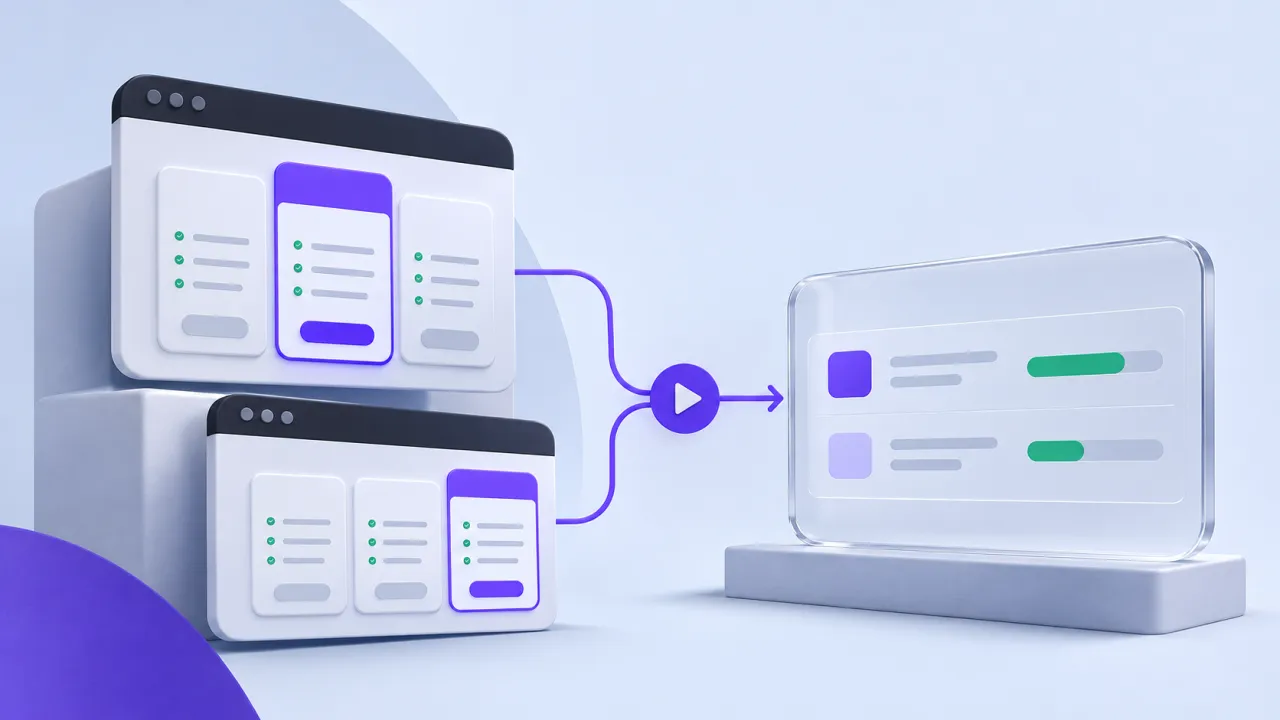
A pricing-page experiment should test a decision, not merely move buttons and hope revenue changes. Readers need to understand who each option is for, what is included and how to take the next step. Measure comprehension and qualified enquiries before treating a change in clicks as a commercial improvement.
The contract to define first
Define the hypothesis and the intended audience. Separate informational plan exploration from an actual enquiry or purchase. Keep product terms accurate and record the experiment version in the relevant analytics path. Small traffic volumes may support usability interviews before a statistically interpretable A/B test; do not turn a handful of visits into a confident winner.
A worked scenario
A synthetic test compares a feature-heavy page with one organized around buyer workflows. The outcome might be fewer confused enquiries rather than more button clicks. Review the submitted scope and lead quality alongside the event count.
An implementation and review sequence
- State the buyer question and experiment hypothesis
- Define meaningful success and diagnostic events separately
- Review enquiry quality and sample limitations
Failure cases worth testing
| Condition or input | Expected behavior |
|---|---|
| CTA clicks rise but enquiries do not | Do not declare a business win |
| A plan term changes | The page and experiment record are updated |
| Traffic is too small | Use qualitative evidence without claiming statistical significance |
Download the illustrative acceptance checklist (JSON)
Tradeoffs and limits
More detail can help complex buyers while overwhelming early-stage visitors. Use progressive disclosure and an honest contact path when the service cannot be priced responsibly as a fixed commodity.
Use the result to make a decision
The practical output is straightforward: define comprehension tasks and qualified-lead outcomes before an A/B test. Keep the assumptions with the artifact so a product owner, implementer or prospective partner can review the same decision. A useful handoff states the supported scope, the evidence collected and the remaining dependency instead of treating a successful demonstration as proof of every operating condition.
Continue with related implementation detail
Related guide: B2B SaaS development cost: build a quote you can compare
Figma MCP implementation acceptance tests
Product design handoff specification
References and current platform requirements
Figma: MCP server documentation
Figma: connecting React components
The linked references provide platform or process context. The worked scenario and acceptance matrix are original examples; adapt them to the actual product, supported environment and documented responsibilities.
Discuss the workflow
Bring a representative Figma flow and its component states to scope a design-to-code engagement.
Explore the relevant AptixLabs service
What should a SaaS pricing-page experiment measure?
A pricing-page experiment should test a decision, not merely move buttons and hope revenue changes. More detail can help complex buyers while overwhelming early-stage visitors.
Which failure cases should be included in the review?
Include these explicit cases: CTA clicks rise but enquiries do not: do not declare a business win; A plan term changes: the page and experiment record are updated; Traffic is too small: use qualitative evidence without claiming statistical significance.