
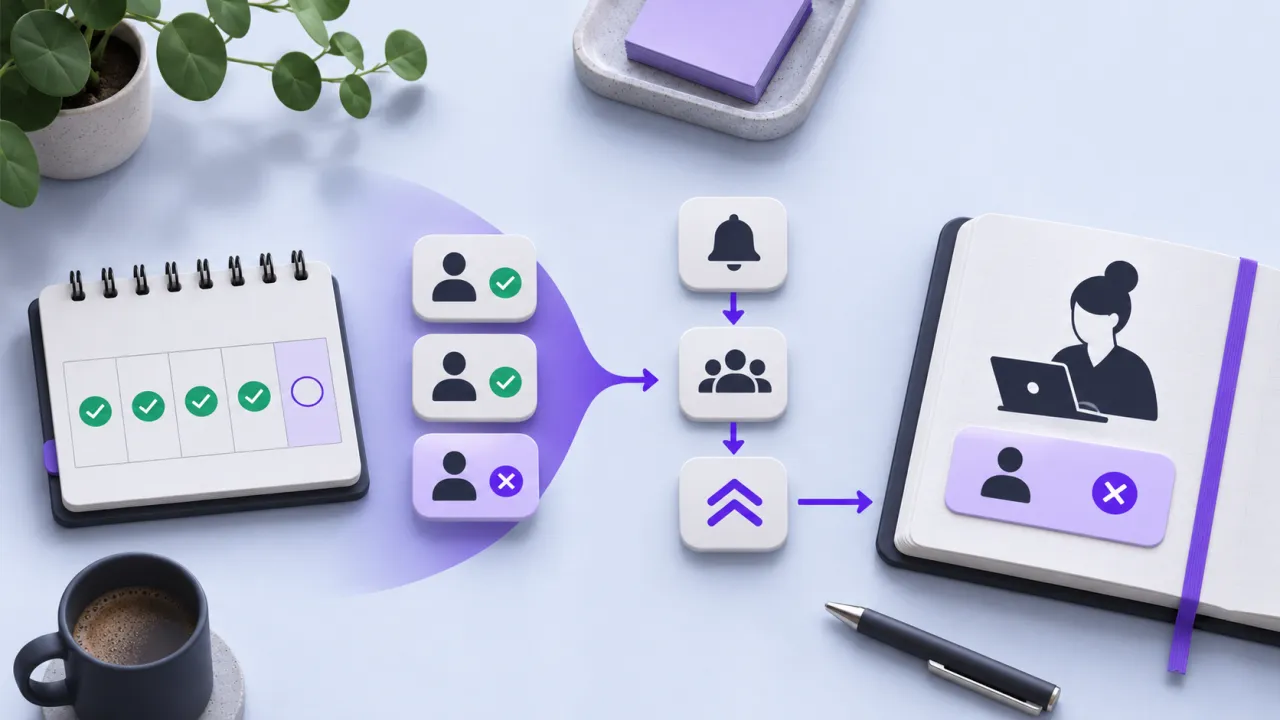
A missed check-in is a workflow signal, not a diagnosis or proof of disengagement. Clients may be traveling, offline or using a different schedule. A useful escalation flow distinguishes a late submission from a failed reminder and gives a coach enough context to choose the next action.
The contract to define first
Define the expected check-in window, grace period and responsible coach. Track delivery separately from submission. Suppress duplicate reminders after a late check-in arrives, and avoid sending increasingly urgent messages without an explicit policy. A coach review queue should show the reason for escalation and previous contact attempts.
A worked scenario
A synthetic client submits a check-in after a reminder job has queued but before it sends. The sender should revalidate the current state so it does not immediately ask for work that is already complete. The coach can then review the actual submission instead of an obsolete missing-item alert.
An implementation and review sequence
- Specify expected windows and ownership
- Revalidate pending reminders before delivery
- Record coach follow-up separately from automated messages
Failure cases worth testing
| Condition or input | Expected behavior |
|---|---|
| Submission arrives after reminder is queued | The obsolete reminder is suppressed |
| Reminder delivery fails | It is not recorded as client nonresponse |
| Coach changes the schedule | Future escalation uses the updated window |
Download the illustrative acceptance checklist (JSON)
Tradeoffs and limits
More automation can reduce manual sorting while increasing notification fatigue. Start with a small number of meaningful states and review actual client responses before adding more nudges.
Use the result to make a decision
The practical output is straightforward: design reminders and human follow-up without implying health outcomes. Keep the assumptions with the artifact so a product owner, implementer or prospective partner can review the same decision. A useful handoff states the supported scope, the evidence collected and the remaining dependency instead of treating a successful demonstration as proof of every operating condition.
Continue with related implementation detail
Related guide: Building a coaching platform where AI and human coaches work together
Coach dashboard workload prioritization
Workout program version history
References and current platform requirements
Android: health and fitness app design
The linked references provide platform or process context. The worked scenario and acceptance matrix are original examples; adapt them to the actual product, supported environment and documented responsibilities.
Discuss the workflow
Map one coach-to-client workflow with AptixLabs before expanding the feature list.
Explore the relevant AptixLabs service
When should a missed check-in reach a human coach?
A missed check-in is a workflow signal, not a diagnosis or proof of disengagement. More automation can reduce manual sorting while increasing notification fatigue.
Which failure cases should be included in the review?
Include these explicit cases: Submission arrives after reminder is queued: the obsolete reminder is suppressed; Reminder delivery fails: it is not recorded as client nonresponse; Coach changes the schedule: future escalation uses the updated window.