
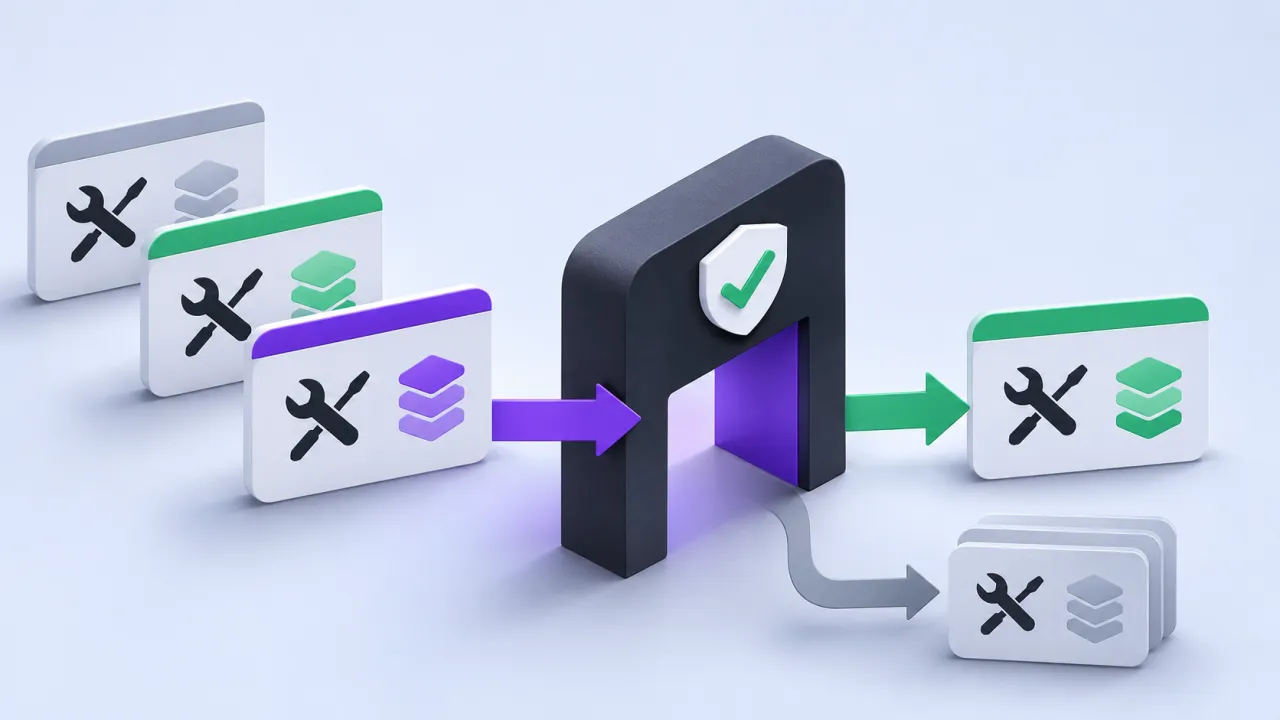
Tool schema changes are product releases. Renaming a field or widening an enum can affect a host that cached an earlier contract, a prompt that expects one response shape, and a downstream parser that validates it. Version the behavioral promise, not just the filename containing the schema.
The contract to define first
Distinguish additive optional fields from breaking changes to required inputs, defaults or side effects. Maintain fixtures for supported callers and define an explicit retirement process. Protocol-version negotiation does not by itself solve application tool-schema compatibility. Keep a small changelog that states what callers must do differently and what old behavior remains supported.
A worked scenario
A hypothetical scheduling tool accepts a local date. A new version needs a timezone. Silently choosing the server timezone changes the meaning of the old request. Prefer an explicit timezone requirement in a versioned contract, or a documented compatibility path tied to account settings. Reject ambiguity rather than quietly scheduling the wrong day.
An implementation and review sequence
- Record input meaning and side effects alongside types
- Classify proposed changes as additive or breaking
- Retire old contracts using observed caller usage
Failure cases worth testing
| Condition or input | Expected behavior |
|---|---|
| An old caller omits a newly optional field | Previous behavior remains predictable |
| A required field changes meaning | Reject or route through an explicit version |
| An enum gains a new value | Old response consumers handle it safely |
Download the illustrative acceptance checklist (JSON)
Tradeoffs and limits
Maintaining multiple versions costs effort. A short overlap period with a measured caller inventory is usually easier to operate than indefinite support for every historical shape.
Use the result to make a decision
The practical output is straightforward: design backwards-compatible tool contracts and migration tests. Keep the assumptions with the artifact so a product owner, implementer or prospective partner can review the same decision. A useful handoff states the supported scope, the evidence collected and the remaining dependency instead of treating a successful demonstration as proof of every operating condition.
Continue with related implementation detail
Related guide: MCP server authentication and authorization for SaaS
Prompt injection through tool results
MCP versus REST for SaaS integrations
References and current platform requirements
MCP specification and tool contracts
Google Cloud: AI security and safety for MCP
Platform capabilities, programme terms and access conditions can change. Check the linked primary references against the version and account you actually use; the patterns above do not establish a provider approval, certification or universal compatibility guarantee.
Discuss the workflow
Bring one workflow, its systems, and the actions requiring human approval.
Explore the relevant AptixLabs service
Which tool-schema changes need a compatibility plan?
Tool schema changes are product releases. Maintaining multiple versions costs effort.
Which failure cases should be included in the review?
Include these explicit cases: An old caller omits a newly optional field: previous behavior remains predictable; A required field changes meaning: reject or route through an explicit version; An enum gains a new value: old response consumers handle it safely.