
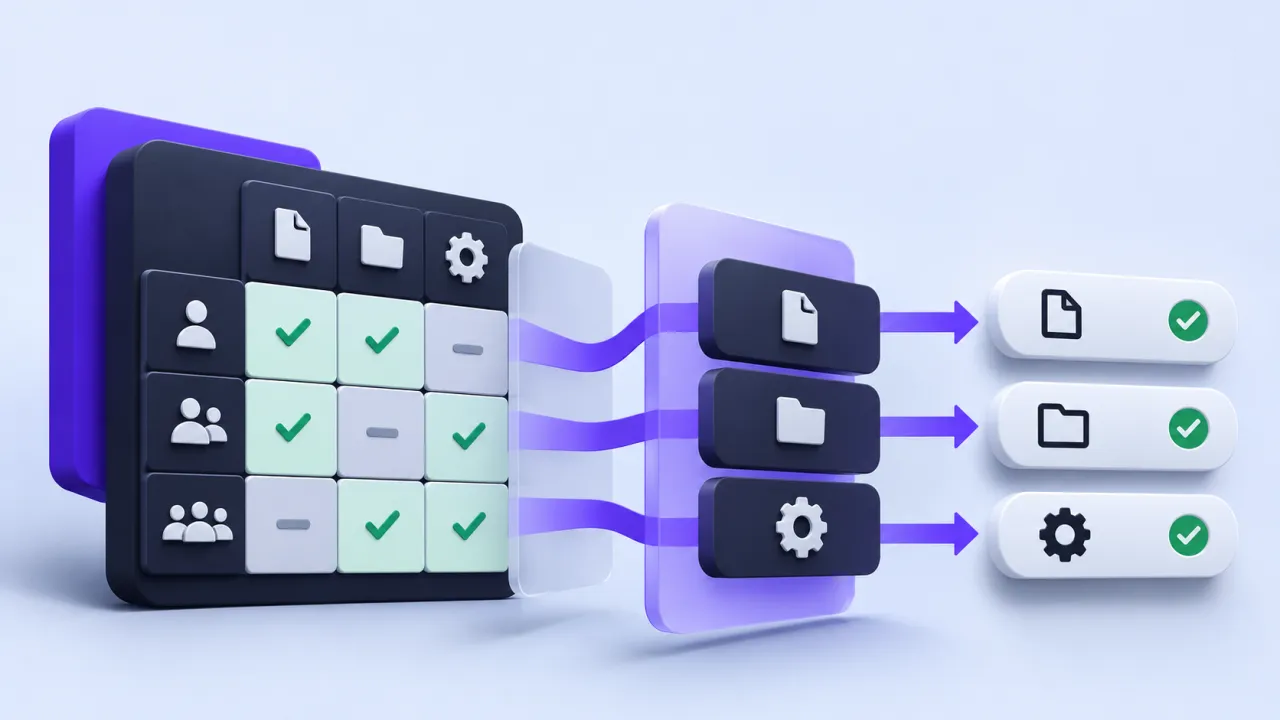
Permission interfaces should help administrators predict the effect of a change. A long matrix of unchecked boxes may expose flexibility while hiding dangerous combinations. Start from real roles and tasks, and show what will become possible before committing a consequential access change.
The contract to define first
Keep user-facing role descriptions aligned with server-enforced permissions. Separate viewing a team from managing it and distinguish assigned-client access from ownership. Where a change affects existing sessions or records, explain the effective behavior. A preview is useful only if the server revalidates the intended change at commit time.
A worked scenario
A synthetic head coach can view team information but cannot manage ownership settings. Renaming that role to “admin” in the UI would create a misleading expectation even if the backend remained restrictive. The interface should describe the actual permission boundary in plain language.
An implementation and review sequence
- Map each role to actual server permissions
- Explain consequential changes before confirmation
- Test denied actions through direct requests as well as UI controls
Failure cases worth testing
| Condition or input | Expected behavior |
|---|---|
| A role can view but not manage | The interface preserves that distinction |
| Permissions change during an open session | New requests use current authorization |
| An administrator previews a change | Commit revalidates its target and scope |
Download the illustrative acceptance checklist (JSON)
Tradeoffs and limits
Highly customizable roles increase both product flexibility and review complexity. A smaller set of well-explained roles may better fit an early product than unrestricted combinations.
Use the result to make a decision
The practical output is straightforward: create role-change preview and denied-action interaction specs. Keep the assumptions with the artifact so a product owner, implementer or prospective partner can review the same decision. A useful handoff states the supported scope, the evidence collected and the remaining dependency instead of treating a successful demonstration as proof of every operating condition.
Continue with related implementation detail
Related guide: Multi-tenant SaaS data isolation with FastAPI and PostgreSQL
Mobile coach portal responsive tables
Accessible charts for health dashboards
References and current platform requirements
Figma: MCP server documentation
Figma: connecting React components
The linked references provide platform or process context. The worked scenario and acceptance matrix are original examples; adapt them to the actual product, supported environment and documented responsibilities.
Discuss the workflow
Bring a representative Figma flow and its component states to scope a design-to-code engagement.
Explore the relevant AptixLabs service
What should a permission-change interface explain?
Permission interfaces should help administrators predict the effect of a change. Highly customizable roles increase both product flexibility and review complexity.
Which failure cases should be included in the review?
Include these explicit cases: A role can view but not manage: the interface preserves that distinction; Permissions change during an open session: new requests use current authorization; An administrator previews a change: commit revalidates its target and scope.