
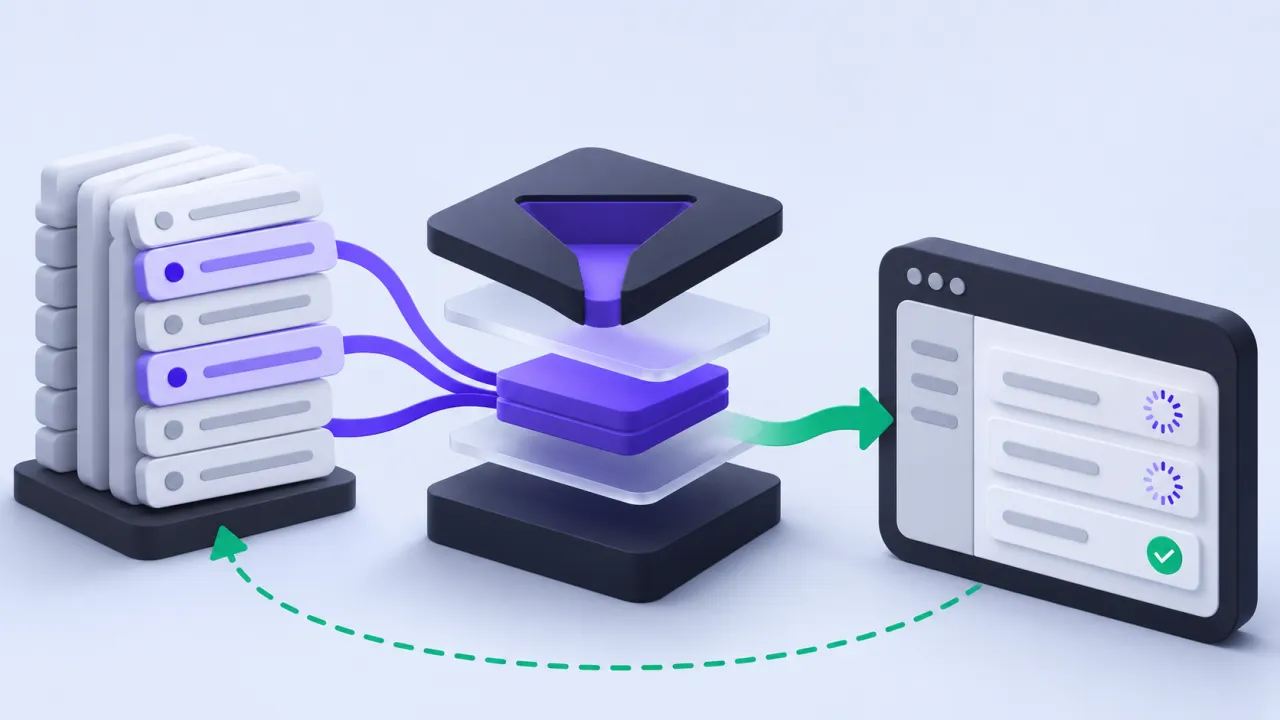
Technical debt deserves priority when it creates observable product or delivery friction. A disliked abstraction is not automatically more urgent than a recurring customer-impacting failure. Connect proposed maintenance work to incidents, change effort, support load or a blocked capability so the tradeoff can be reviewed.
The contract to define first
Record the symptom, affected workflow, evidence and proposed intervention. Estimate the cost of leaving it in place alongside the effort and risk of changing it. Prefer small measurable improvements where possible, and avoid attaching a precise financial return to incomplete operational data. Keep necessary maintenance visible rather than hiding it inside unrelated feature estimates.
A worked scenario
A hypothetical cache layer repeatedly causes account-switching bugs. Fixing identity boundaries has a clear product rationale and acceptance task. A broad framework replacement may be less urgent if it cannot explain which failure or delivery bottleneck it resolves.
An implementation and review sequence
- Connect each debt item to an observable symptom
- Choose a bounded intervention and acceptance task
- Review whether the symptom actually improves
Failure cases worth testing
| Condition or input | Expected behavior |
|---|---|
| A refactor has no stated outcome | Clarify the reason before prioritizing it |
| The same incident recurs | Reassess whether the intervention addressed the cause |
| A change adds migration risk | Include that risk in the decision |
Download the illustrative acceptance checklist (JSON)
Tradeoffs and limits
Some foundational work has benefits that are difficult to measure immediately. State the reasoning and uncertainty rather than forcing every architectural improvement into a fabricated ROI calculation.
Use the result to make a decision
The practical output is straightforward: tie debt to incidents lead time and customer-impact evidence. Keep the assumptions with the artifact so a product owner, implementer or prospective partner can review the same decision. A useful handoff states the supported scope, the evidence collected and the remaining dependency instead of treating a successful demonstration as proof of every operating condition.
Continue with related implementation detail
Related guide: Trace one user action across client, API and background work.
API integration feasibility checklist
Rewrite versus incremental modernization
References and current platform requirements
thoughtbot: customer discovery
The linked references provide platform or process context. The worked scenario and acceptance matrix are original examples; adapt them to the actual product, supported environment and documented responsibilities.
Discuss the workflow
Bring one customer workflow and its constraints to define a reviewable discovery scope.
Explore the relevant AptixLabs service
How should technical debt be prioritized?
Technical debt deserves priority when it creates observable product or delivery friction. Some foundational work has benefits that are difficult to measure immediately.
Which failure cases should be included in the review?
Include these explicit cases: A refactor has no stated outcome: clarify the reason before prioritizing it; The same incident recurs: reassess whether the intervention addressed the cause; A change adds migration risk: include that risk in the decision.