
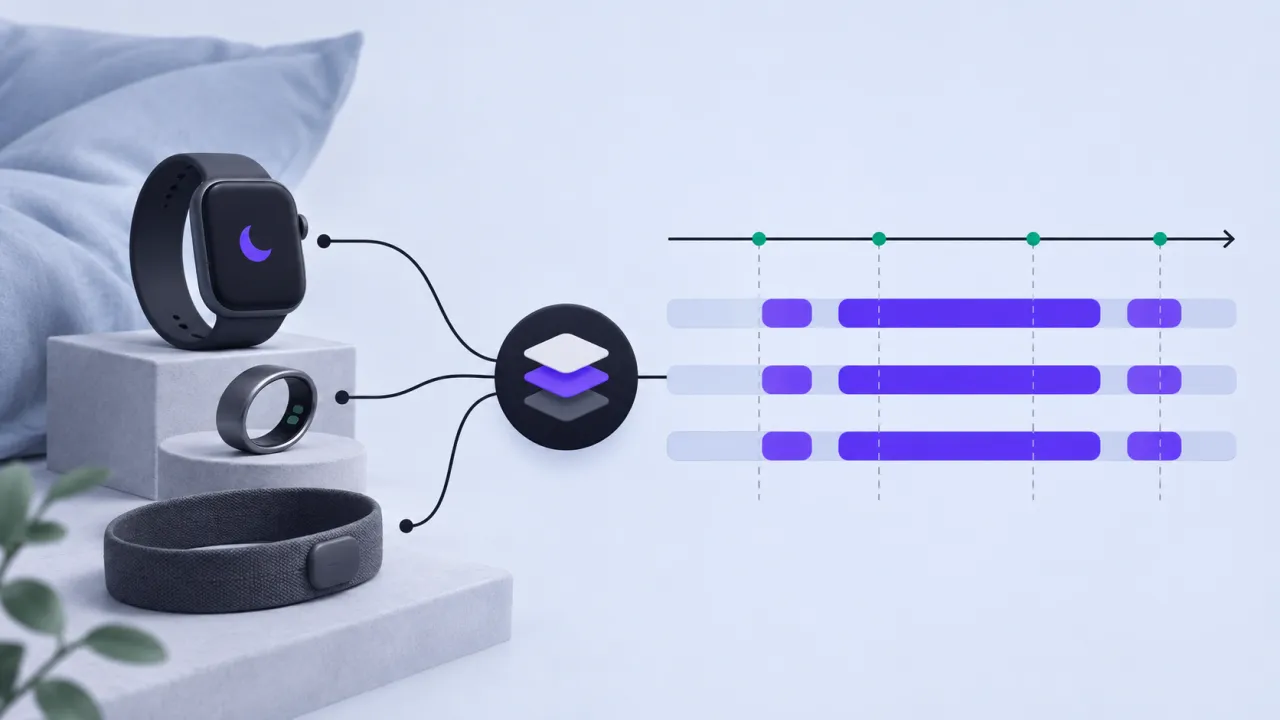
Sleep sources can describe the same night with different intervals, stage names and levels of detail. Normalization should preserve what the source actually measured while producing a coherent view for the product. Treating every interval as equivalent can double-count time or imply a precision the data does not support.
The contract to define first
Keep raw source intervals separate from normalized sessions. Define rules for overlap, awake periods and source preference, and record the transformation version. Do not infer sleep stages that a source did not provide. Summaries should distinguish measured duration, missing coverage and any estimate introduced by the application.
A worked scenario
Create a synthetic night with an overlapping watch interval and a phone summary. Add an awake segment and a source correction. The expected result should explain which intervals contribute, which are excluded and why the total changes after correction.
An implementation and review sequence
- Preserve source intervals before transformation
- Specify overlap and awake-period handling
- Version normalization and rebuild affected sessions
Failure cases worth testing
| Condition or input | Expected behavior |
|---|---|
| Two sources overlap | The selected policy avoids double counting |
| One source has no stages | No stages are invented |
| An interval is corrected | The derived session is recomputed |
Download the illustrative acceptance checklist (JSON)
Tradeoffs and limits
A single normalized score is convenient but can hide uncertainty. For product decisions that depend on coverage, keep the source detail available to authorized users and support.
Use the result to make a decision
The practical output is straightforward: map intervals and overlapping sources with transparent assumptions. Keep the assumptions with the artifact so a product owner, implementer or prospective partner can review the same decision. A useful handoff states the supported scope, the evidence collected and the remaining dependency instead of treating a successful demonstration as proof of every operating condition.
Continue with related implementation detail
Related guide: Wearable integration starts with permissions and data ownership.
Health permission revocation UX
References and current platform requirements
Android: synchronize Health Connect data
Platform capabilities, programme terms and access conditions can change. Check the linked primary references against the version and account you actually use; the patterns above do not establish a provider approval, certification or universal compatibility guarantee.
Discuss the workflow
Bring the supported devices, required metrics, and your current sync failure examples.
Explore the relevant AptixLabs service
How should overlapping sleep intervals be normalized?
Sleep sources can describe the same night with different intervals, stage names and levels of detail. A single normalized score is convenient but can hide uncertainty.
Which failure cases should be included in the review?
Include these explicit cases: Two sources overlap: the selected policy avoids double counting; One source has no stages: no stages are invented; An interval is corrected: the derived session is recomputed.