
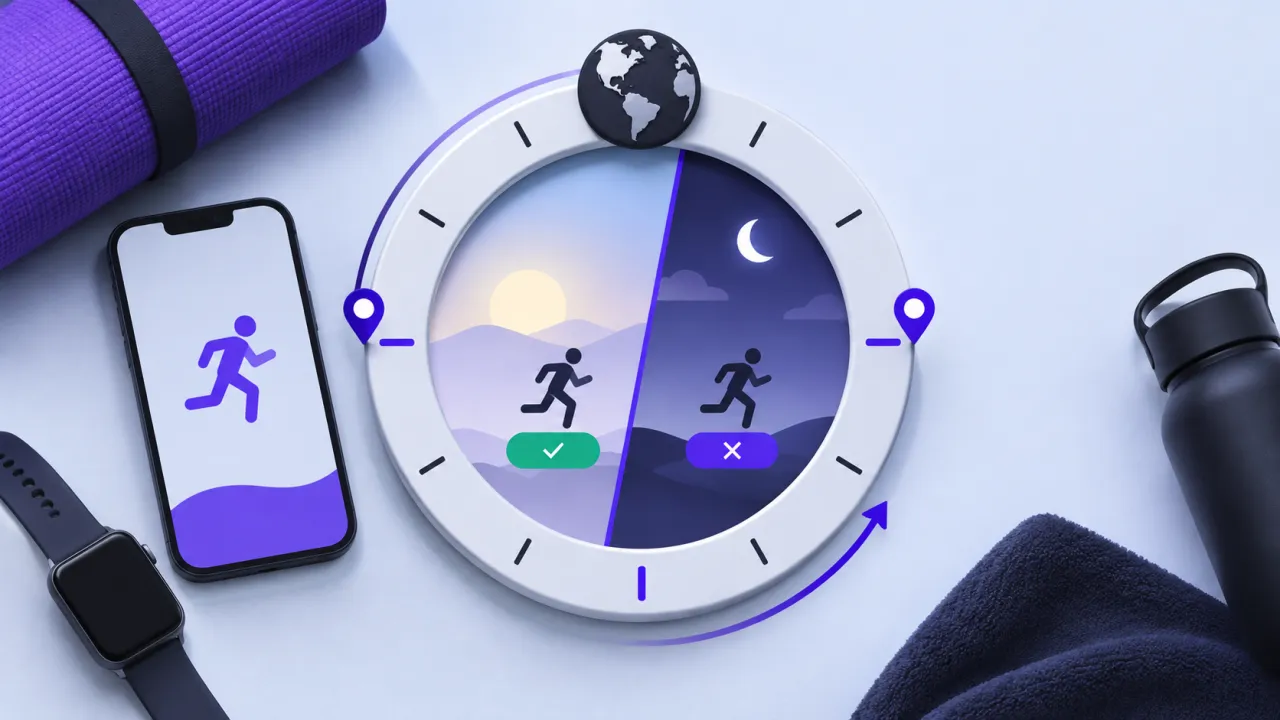
A daily fitness metric is meaningful only when its day boundary is defined. Travel, daylight-saving changes and sessions that cross midnight can shift a workout or sleep interval into a different bucket. Storing a timestamp without its interpretation makes apparently simple daily charts surprisingly difficult to repair.
The contract to define first
Store absolute instants for events and preserve the relevant timezone or offset context when the product needs historical local-day behavior. Define a policy separately for workouts, sleep and daily totals. A sleep session may belong to its wake day, while a workout may be grouped by start time. Neither rule should be an accidental side effect of the server timezone.
A worked scenario
A synthetic workout begins before midnight and ends after it. Test the chosen policy in the original timezone and after the user travels. The session identity should stay stable even if its presentation or the selected reporting timezone changes.
An implementation and review sequence
- Define day-assignment rules for each metric
- Preserve event identity and timezone context
- Build midnight travel and daylight-saving fixtures
Failure cases worth testing
| Condition or input | Expected behavior |
|---|---|
| A session crosses midnight | One documented day-assignment policy applies |
| A local hour repeats | Distinct instants remain distinguishable |
| User changes reporting timezone | Historical presentation follows the chosen policy |
Download the illustrative acceptance checklist (JSON)
Tradeoffs and limits
Rebucketing historical data after every timezone change can make prior reports appear inconsistent. A clearly documented reporting timezone is often easier to explain than silent recalculation.
Use the result to make a decision
The practical output is straightforward: show midnight travel and daylight-saving fixtures for daily metrics. Keep the assumptions with the artifact so a product owner, implementer or prospective partner can review the same decision. A useful handoff states the supported scope, the evidence collected and the remaining dependency instead of treating a successful demonstration as proof of every operating condition.
Continue with related implementation detail
Related guide: A reminder is a business event before it is a push message.
Sleep data normalization across devices
HealthKit deleted sample synchronization
References and current platform requirements
Android: synchronize Health Connect data
Platform capabilities, programme terms and access conditions can change. Check the linked primary references against the version and account you actually use; the patterns above do not establish a provider approval, certification or universal compatibility guarantee.
Discuss the workflow
Bring the supported devices, required metrics, and your current sync failure examples.
Explore the relevant AptixLabs service
Which timezone should define a fitness reporting day?
A daily fitness metric is meaningful only when its day boundary is defined. Rebucketing historical data after every timezone change can make prior reports appear inconsistent.
Which failure cases should be included in the review?
Include these explicit cases: A session crosses midnight: one documented day-assignment policy applies; A local hour repeats: distinct instants remain distinguishable; User changes reporting timezone: historical presentation follows the chosen policy.