
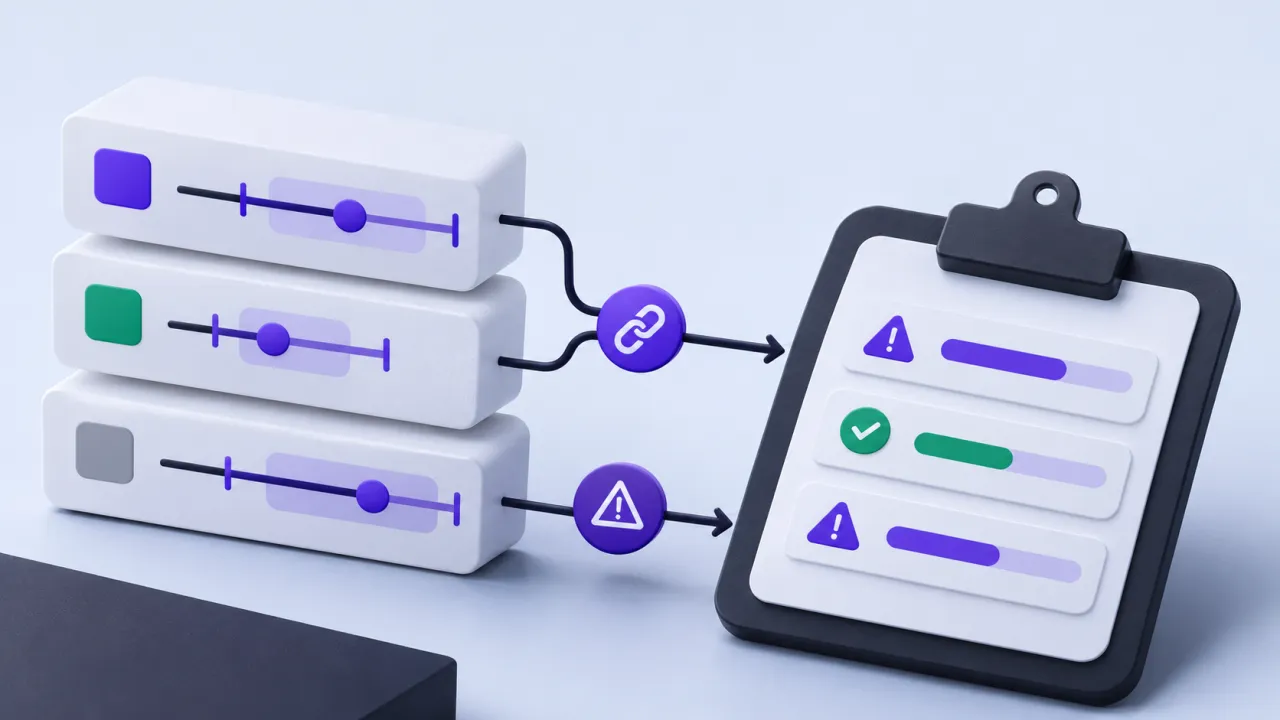
An estimate is more useful when its uncertainty is visible. External approvals, unclear data quality and unknown legacy behavior can change delivery effort more than the number of screens. Attach a risk register to the work breakdown so buyers can see which assumptions support the estimate.
The contract to define first
For each work package, record the dependency, uncertainty, likely impact and next evidence needed. Use ranges or scenarios where exact effort is not justified. Separate contingency from confirmed scope and define how new information changes the plan. Do not present a single precise total as a promise when critical access or requirements remain unresolved.
A worked scenario
A hypothetical integration estimate assumes a provider sandbox and documented webhooks. If neither is available, the discovery task should resolve that risk before a fixed implementation commitment. The estimate can state a conditional range instead of hiding the uncertainty inside a buffer nobody can explain.
An implementation and review sequence
- Attach assumptions and dependencies to work packages
- Use ranges tied to explicit scenarios
- Define how evidence changes the estimate
Failure cases worth testing
| Condition or input | Expected behavior |
|---|---|
| Provider access is denied | The affected scope is identified |
| A risk is resolved | The estimate is updated with the new evidence |
| New requirements arrive | They are not silently absorbed into an unchanged promise |
Download the illustrative acceptance checklist (JSON)
Tradeoffs and limits
Too many low-impact risks can obscure the few that matter. Prioritize uncertainties that change feasibility, cost, timing or operating responsibility.
Use the result to make a decision
The practical output is straightforward: attach uncertain dependencies and explicit ranges to each work package. Keep the assumptions with the artifact so a product owner, implementer or prospective partner can review the same decision. A useful handoff states the supported scope, the evidence collected and the remaining dependency instead of treating a successful demonstration as proof of every operating condition.
Continue with related implementation detail
Related guide: B2B SaaS development cost: build a quote you can compare
AI proof of concept to production
Fitness app feature prioritization
References and current platform requirements
thoughtbot: customer discovery
The linked references provide platform or process context. The worked scenario and acceptance matrix are original examples; adapt them to the actual product, supported environment and documented responsibilities.
Discuss the workflow
Bring one customer workflow and its constraints to define a reviewable discovery scope.
Explore the relevant AptixLabs service
How should uncertainty appear in a build estimate?
An estimate is more useful when its uncertainty is visible. Too many low-impact risks can obscure the few that matter.
Which failure cases should be included in the review?
Include these explicit cases: Provider access is denied: the affected scope is identified; A risk is resolved: the estimate is updated with the new evidence; New requirements arrive: they are not silently absorbed into an unchanged promise.