
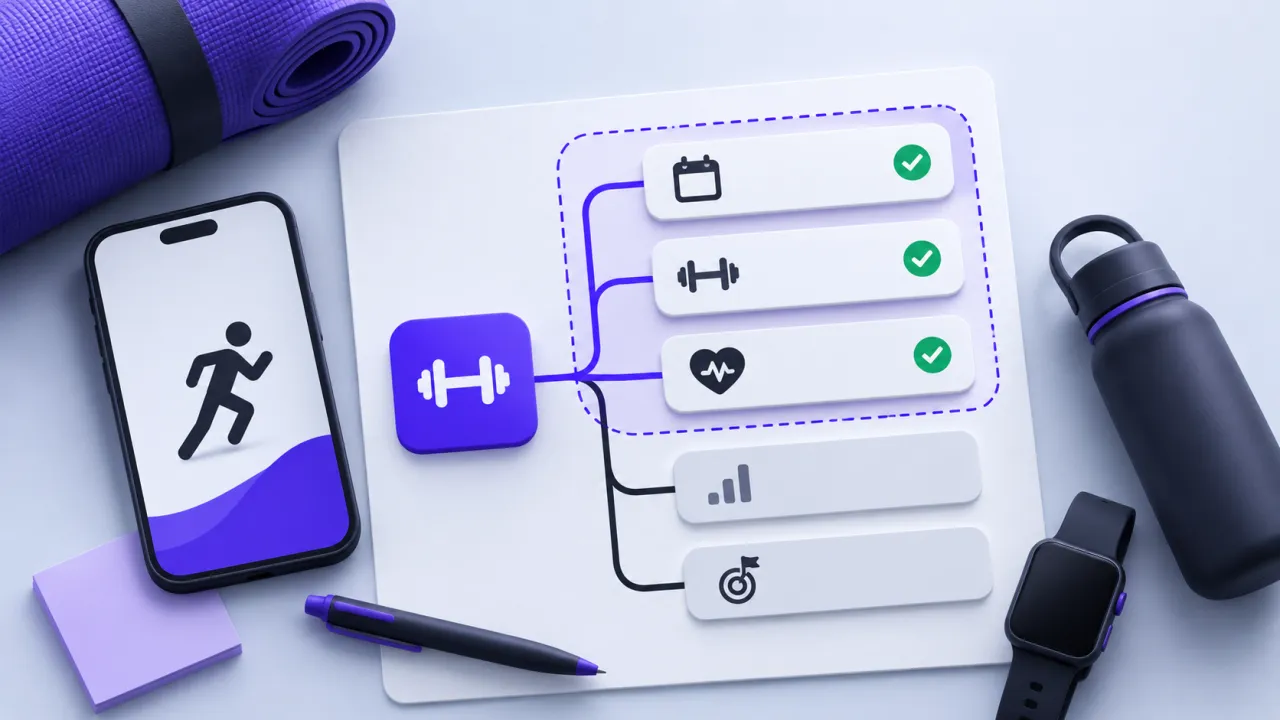
Fitness-app prioritization should start with the first complete user workflow. A large feature inventory can hide whether a client can receive a plan, log a session and get useful follow-up. Prioritize the connected path that delivers value before adding optional integrations or decorative dashboards.
The contract to define first
Map each proposed feature to a user task, dependency and acceptance condition. Separate the coach’s setup work from the client’s first-use experience. Consider support and failure states in the minimum scope, because a feature that works only in a demo is not a complete first release. Defer capabilities whose value or operating requirements are still unclear.
A worked scenario
A hypothetical first release may support manual workout logging before a broad wearable integration. That is a deliberate product choice if the core coaching loop can be tested without the additional data. The roadmap can then use observed need rather than assuming every device connection is mandatory on day one.
An implementation and review sequence
- Identify the first end-to-end coach and client workflow
- Map dependencies and failure handling into minimum scope
- Defer optional work with explicit revisit criteria
Failure cases worth testing
| Condition or input | Expected behavior |
|---|---|
| A feature has no link to first value | It can be challenged or deferred |
| The happy path works but recovery is absent | The workflow remains incomplete |
| Users repeatedly need a deferred capability | Revisit using observed evidence |
Download the illustrative acceptance checklist (JSON)
Tradeoffs and limits
A narrow release can disappoint users who expected a wider promise. Align public messaging with the actual first workflow and make the limits clear before acquisition.
Use the result to make a decision
The practical output is straightforward: separate first value from expensive optional integrations. Keep the assumptions with the artifact so a product owner, implementer or prospective partner can review the same decision. A useful handoff states the supported scope, the evidence collected and the remaining dependency instead of treating a successful demonstration as proof of every operating condition.
Continue with related implementation detail
Related guide: Building UltraFit360: the app, coach portal and shared backend
SaaS build estimate risk register
SaaS discovery sprint deliverables
References and current platform requirements
thoughtbot: customer discovery
The linked references provide platform or process context. The worked scenario and acceptance matrix are original examples; adapt them to the actual product, supported environment and documented responsibilities.
Discuss the workflow
Bring one customer workflow and its constraints to define a reviewable discovery scope.
Explore the relevant AptixLabs service
How should a fitness MVP prioritize its first workflow?
Fitness-app prioritization should start with the first complete user workflow. A narrow release can disappoint users who expected a wider promise.
Which failure cases should be included in the review?
Include these explicit cases: A feature has no link to first value: it can be challenged or deferred; The happy path works but recovery is absent: the workflow remains incomplete; Users repeatedly need a deferred capability: revisit using observed evidence.