
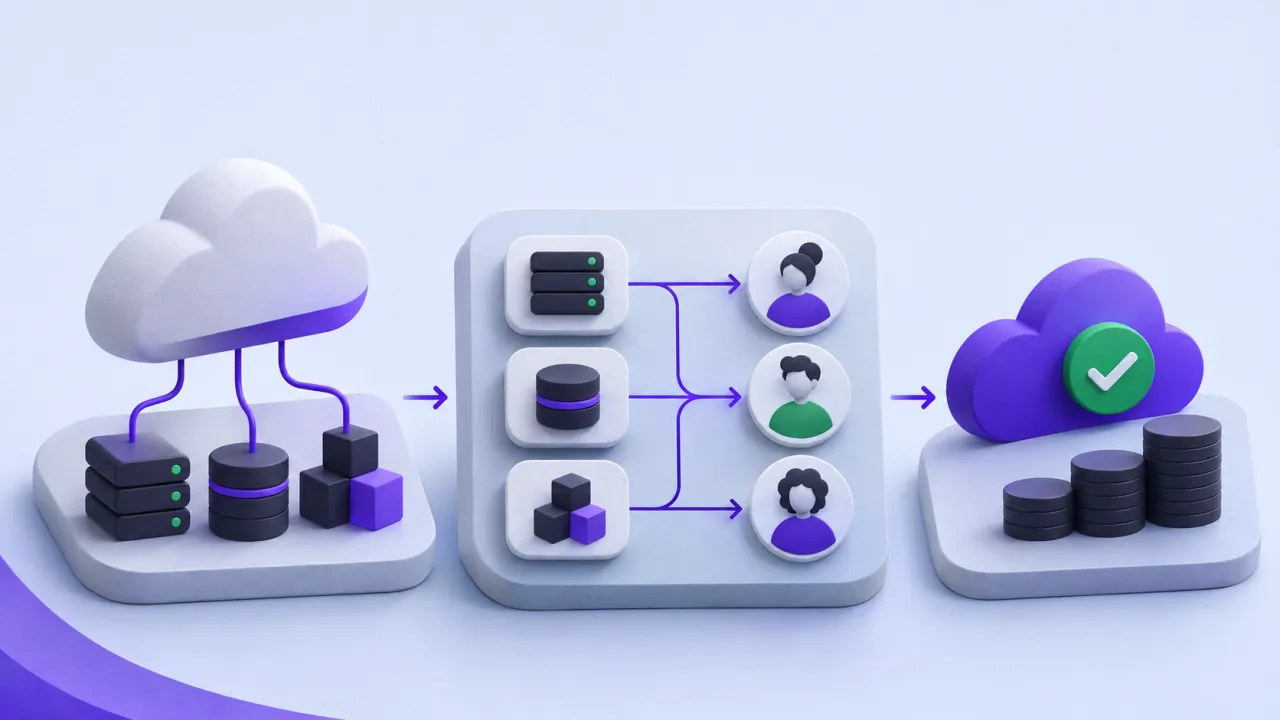
A cloud bill becomes easier to manage when each meaningful workload has an accountable owner. A total spending alert cannot explain whether an increase came from legitimate growth, a retry loop or an abandoned experiment. Cost ownership connects technical resources to product purpose and a response process.
The contract to define first
Map services to environments, workloads and owners using the provider’s supported allocation mechanisms. Define budgets and escalation routes, then review large unexplained changes. Keep shared costs in an explicit pool instead of assigning them arbitrarily to whichever team is easiest to label. Credits should not suppress ownership because the underlying usage continues even when the immediate cash bill is covered.
A worked scenario
A hypothetical image-processing experiment creates a resource and is later abandoned. If its owner and shutdown condition were recorded, the next review can remove it deliberately. Without that context, the team may keep paying because nobody knows whether a customer depends on it.
An implementation and review sequence
- Map resources to workload environment and owner
- Define budget alerts with an actual response owner
- Review unowned and unexplained spend regularly
Failure cases worth testing
| Condition or input | Expected behavior |
|---|---|
| A budget alert fires | A named person has a response path |
| A shared resource serves several products | Its allocation rule is explicit |
| An experiment ends | Its retention and shutdown decisions are recorded |
Download the illustrative acceptance checklist (JSON)
Tradeoffs and limits
Very granular allocation can cost more effort than it returns. Begin with the largest workloads and environments, then add detail where it changes a real decision.
Use the result to make a decision
The practical output is straightforward: assign service owners budgets and alert responses to actual workloads. Keep the assumptions with the artifact so a product owner, implementer or prospective partner can review the same decision. A useful handoff states the supported scope, the evidence collected and the remaining dependency instead of treating a successful demonstration as proof of every operating condition.
Continue with related implementation detail
Related guide: Budget AI features per completed task.
Startup technical data room checklist
AI startup unit economics worksheet
References and current platform requirements
Microsoft for Startups: current programme overview
Google Cloud: startup programme
Platform capabilities, programme terms and access conditions can change. Check the linked primary references against the version and account you actually use; the patterns above do not establish a provider approval, certification or universal compatibility guarantee.
Discuss the workflow
Discuss the product scope and post-credit operating assumptions; AptixLabs does not guarantee grants or funding.
Explore the relevant AptixLabs service
Who should own cloud-cost alerts?
A cloud bill becomes easier to manage when each meaningful workload has an accountable owner. Very granular allocation can cost more effort than it returns.
Which failure cases should be included in the review?
Include these explicit cases: A budget alert fires: a named person has a response path; A shared resource serves several products: its allocation rule is explicit; An experiment ends: its retention and shutdown decisions are recorded.