
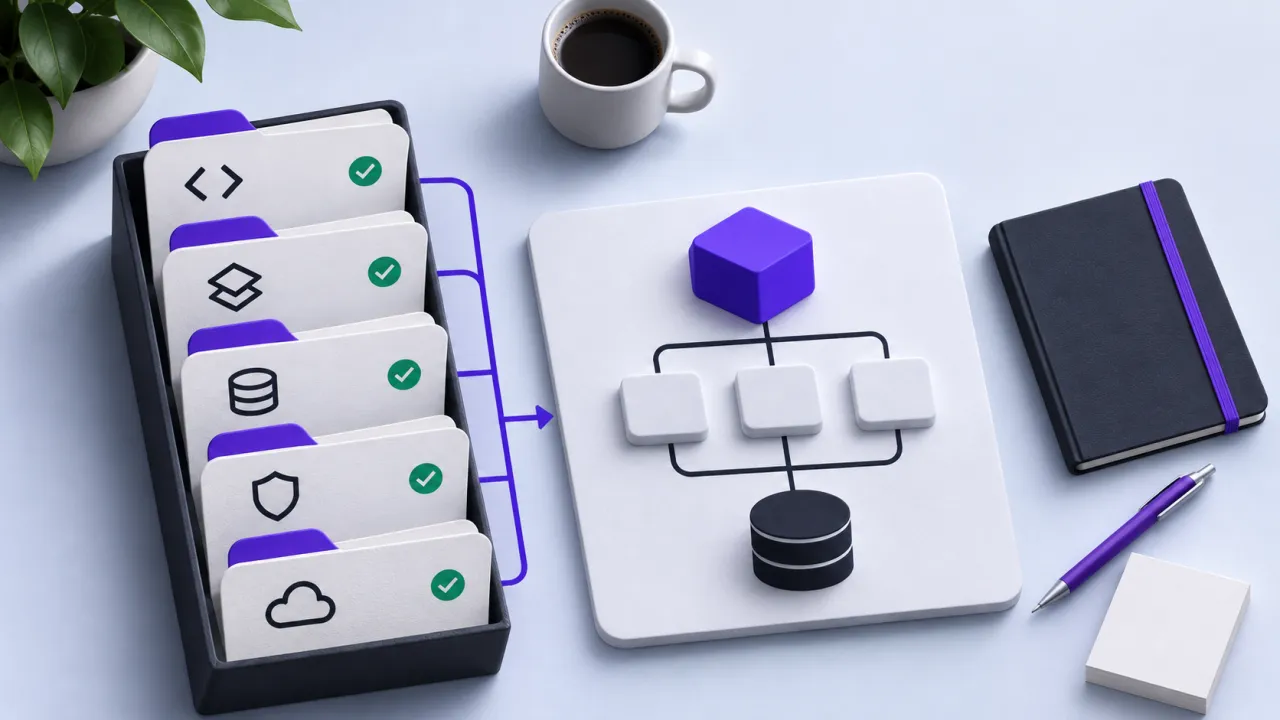
A technical data room should let a reviewer inspect the product’s engineering evidence without navigating a pile of unexplained screenshots. Organize it around architecture, ownership, security practices, operations and known risks. The purpose is traceability, not presenting the absence of issues as a sign of maturity.
The contract to define first
Use an evidence index with artifact dates, owners and access restrictions. Distinguish current production facts from planned improvements. Include dependency and license information, deployment ownership and recovery documentation where relevant. Do not place credentials or raw customer records in the room; a reviewer can understand a control through appropriately redacted evidence.
A worked scenario
A hypothetical investor asks how a startup handles database recovery. A recent restore exercise with scope and limitations is stronger evidence than a generic “daily backups” slide. If no restore has been tested, state that gap and its owner rather than creating a retrospective success story.
An implementation and review sequence
- Create an evidence index with dates and owners
- Separate demonstrated controls from planned work
- Review sensitive material and access before sharing
Failure cases worth testing
| Condition or input | Expected behavior |
|---|---|
| An artifact is outdated | Its status is visible to the reviewer |
| A control has not been tested | The gap is stated explicitly |
| A document contains secrets | Provide an appropriate redacted artifact instead |
Download the illustrative acceptance checklist (JSON)
Tradeoffs and limits
Not every reviewer needs every internal document. Use staged access and an index that can answer common questions without unnecessarily widening exposure.
Use the result to make a decision
The practical output is straightforward: prepare evidence index for architecture security IP and operations. Keep the assumptions with the artifact so a product owner, implementer or prospective partner can review the same decision. A useful handoff states the supported scope, the evidence collected and the remaining dependency instead of treating a successful demonstration as proof of every operating condition.
Continue with related implementation detail
Related guide: AI startup technical due diligence: evidence beyond the demo
Bootstrap versus VC for software studios
References and current platform requirements
Microsoft for Startups: current programme overview
Google Cloud: startup programme
Platform capabilities, programme terms and access conditions can change. Check the linked primary references against the version and account you actually use; the patterns above do not establish a provider approval, certification or universal compatibility guarantee.
Discuss the workflow
Discuss the product scope and post-credit operating assumptions; AptixLabs does not guarantee grants or funding.
Explore the relevant AptixLabs service
What evidence belongs in a technical data room?
A technical data room should let a reviewer inspect the product’s engineering evidence without navigating a pile of unexplained screenshots. Not every reviewer needs every internal document.
Which failure cases should be included in the review?
Include these explicit cases: An artifact is outdated: its status is visible to the reviewer; A control has not been tested: the gap is stated explicitly; A document contains secrets: provide an appropriate redacted artifact instead.