
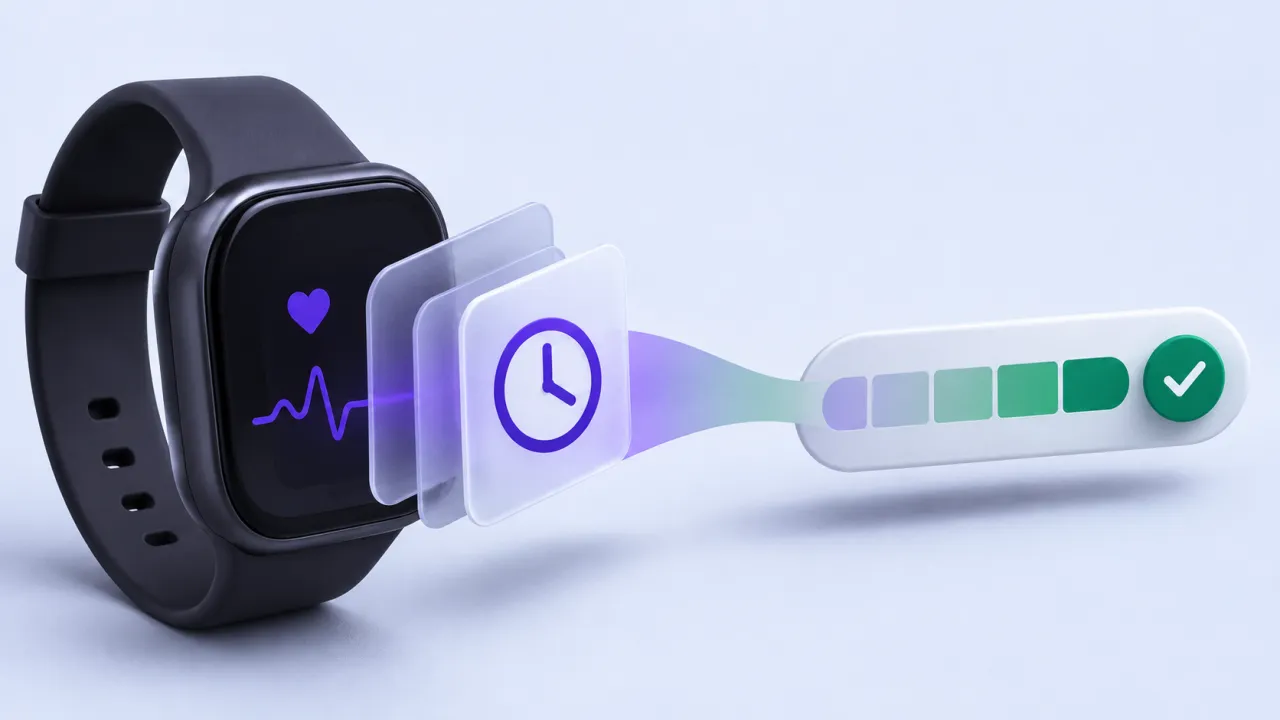
A wearable number without freshness context can look more authoritative than it is. The latest recorded heart rate might be recent, while a sleep summary may reflect a previous night. A product should distinguish when a measurement occurred, when it was synchronized and whether it is suitable for the current decision.
The contract to define first
Define freshness by metric and use case rather than one universal timeout. Preserve measurement and ingestion timestamps separately. The UI should communicate unavailable, updating and stale states without turning them all into zero. Derived scores need an explicit policy when one input becomes too old.
A worked scenario
Imagine a synthetic dashboard with current steps and an old resting-heart-rate sample. The display should not label the whole account “synced” and imply every metric is current. A metric-level state can explain the difference and offer an appropriate synchronization action.
An implementation and review sequence
- Store measurement and synchronization timestamps separately
- Define metric-specific freshness policies
- Test derived values when one input is stale
Failure cases worth testing
| Condition or input | Expected behavior |
|---|---|
| An old sample arrives in a new sync | Its measurement age remains visible |
| One metric is unavailable | Do not substitute a plausible zero |
| A derived score uses stale inputs | Apply and disclose the chosen policy |
Download the illustrative acceptance checklist (JSON)
Tradeoffs and limits
Too many status badges can overwhelm the interface. Surface freshness where it changes interpretation, and keep deeper provenance available on demand.
Use the result to make a decision
The practical output is straightforward: build stale-data thresholds and user-facing status examples. Keep the assumptions with the artifact so a product owner, implementer or prospective partner can review the same decision. A useful handoff states the supported scope, the evidence collected and the remaining dependency instead of treating a successful demonstration as proof of every operating condition.
Continue with related implementation detail
Related guide: How fitness apps turn Apple Watch data into recovery scores
Health data provenance architecture
Health permission revocation UX
References and current platform requirements
Android: synchronize Health Connect data
Platform capabilities, programme terms and access conditions can change. Check the linked primary references against the version and account you actually use; the patterns above do not establish a provider approval, certification or universal compatibility guarantee.
Discuss the workflow
Bring the supported devices, required metrics, and your current sync failure examples.
Explore the relevant AptixLabs service
How should an app distinguish stale and current wearable data?
A wearable number without freshness context can look more authoritative than it is. Too many status badges can overwhelm the interface.
Which failure cases should be included in the review?
Include these explicit cases: An old sample arrives in a new sync: its measurement age remains visible; One metric is unavailable: do not substitute a plausible zero; A derived score uses stale inputs: apply and disclose the chosen policy.