
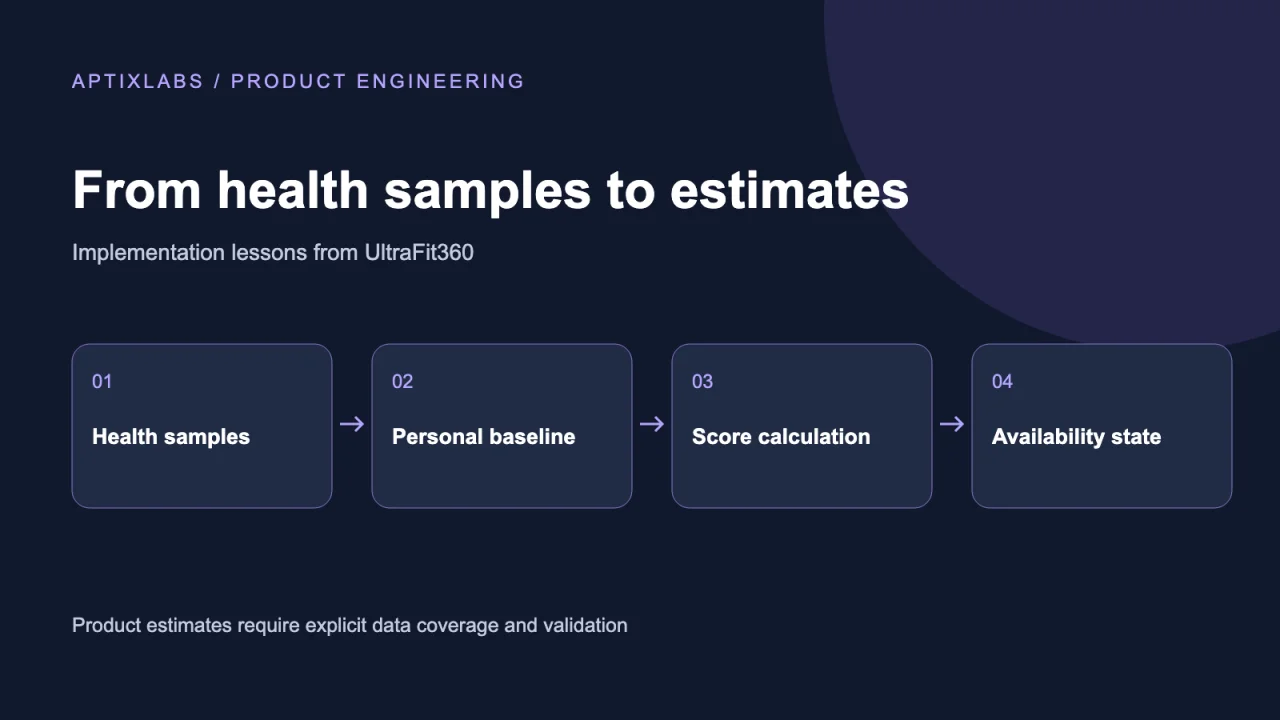
Apple Watch data can contribute to a fitness app's recovery estimates, but the data and the score are different things. Health samples become inputs to an application-defined calculation. In UltraFit360's reviewed source, strain, stress and recovery are calculated in the backend, saved as health metric records and retrieved by the mobile app with explicit availability states.
Why this is a useful engineering topic now
ACSM's current 2027 fitness trends page places wearable technology first and mobile exercise apps second. This is a professional trend survey, not a measure of demand for a particular app or proof that a recovery algorithm improves outcomes. It does make the integration between wearable records and usable app experiences a relevant product question.
The first decision is what the score means. A wellness estimate can help organize a person's recorded activity and trends. It should not be presented as a diagnosis, a precise measurement of psychological stress or medical clearance to train.
Preserve the meaning of each input
HealthKit exposes an HRV SDNN quantity type. Different HRV statistics are not interchangeable merely because both values use milliseconds. Preserve the sample type, unit, time range and source through ingestion; do not collapse those details into an unexplained number called HRV.
UltraFit360's health-sync code handles HRV fields, while its score service recognizes health metric keys and calculates from available records. Before shipping a new wearable integration, trace one consented sample through native collection, normalization, storage and the score endpoint. Source inspection alone does not prove that every device, permission combination or watchOS version follows the intended path.
Inside the reviewed score implementation
The version-two formula module uses weighted heart-rate-zone minutes for one strain path, with an active-calorie fallback. Its stress calculation combines available heart-rate variability, resting-heart-rate and sleep inputs. Recovery then incorporates stress, sleep and previous strain. These are product formula choices; this review found no basis to describe the resulting scores as clinically validated.
The backend records calculated results in health_metric_logs. The mobile hook requests a date-specific ensure-calculated endpoint and uses a date-and-user query key. It also supports unavailable results, missing metrics and separate historical views. That gives the interface a way to distinguish a stored estimate from insufficient information.
Missing data is a product state
A watch that was not worn overnight, an unavailable baseline and a denied health-data permission must not all become a score of zero. A zero looks like a measurement. An unavailable state tells the truth about what the app can currently explain.
For a hypothetical new user with activity records but insufficient heart data, show the available activity and explain why the recovery estimate is unavailable. Avoid filling the gap with a persuasive AI narrative. When historical samples arrive later, make recalculation behaviour explicit so yesterday's displayed result does not change without context.
An integration acceptance checklist
- Check metric type and units at ingestion, including timestamps and the user's local day boundary.
- Test missing inputs, a zero-variance baseline and sparse history before testing attractive dashboard states.
- Record the formula version and input coverage alongside results so calculations can be investigated.
- Verify that date changes and account changes cannot display another cached result as current.
- Separate algorithm validation from UI testing; a responsive chart does not establish physiological accuracy.
Building the next wearable feature
The transferable lesson from UltraFit360 is the separation of collection, calculation, storage and presentation. That separation makes missing-data behaviour and formula changes easier to reason about. A team commissioning this work should ask for an input-to-screen trace and a validation plan before discussing the colour of a readiness ring.
Sources and next steps
Apple: HealthKit HRV SDNN quantity type
ACSM: current fitness trends and survey context
Download UltraFit360 for iPhone
Download UltraFit360 for Android
Discuss a related implementation with AptixLabs
Does Apple Watch directly provide UltraFit360’s recovery score?
The reviewed UltraFit360 backend calculates its own product estimate from available health records. That estimate should not be confused with a direct sensor measurement or clinical assessment.