
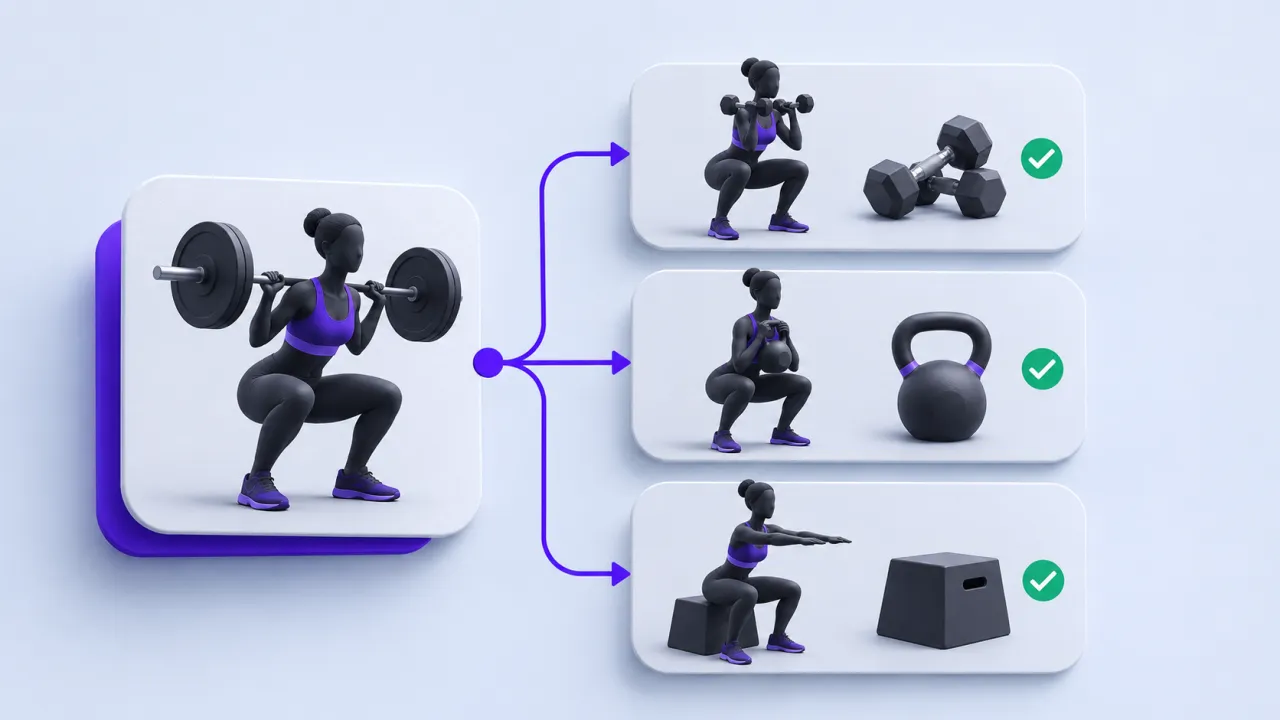
Exercise substitution is a constraint problem before it is a similarity problem. Two movements may train a similar region while requiring different equipment, skill or setup. A useful replacement workflow explains which constraints it preserves and leaves space for a coach to reject the suggestion.
The contract to define first
Represent equipment, movement pattern, programming role and relevant user constraints explicitly. Distinguish a one-session substitution from a permanent program edit. Do not infer suitability from a name match alone, and do not turn a general substitution engine into medical clearance for a user’s reported injury.
A worked scenario
A synthetic client finds that the planned cable station is unavailable. A replacement should account for available equipment and the intended role in the session. Choosing it for today should not silently rewrite every future week or erase the original plan from historical logs.
An implementation and review sequence
- Define constraints and the scope of replacement
- Present the reason for each candidate
- Preserve coach override and the original prescription
Failure cases worth testing
| Condition or input | Expected behavior |
|---|---|
| No compatible equipment is available | Show no suitable option rather than invent one |
| User selects today only | Future prescriptions remain scoped correctly |
| Coach rejects a suggestion | The workflow supports an explicit alternative |
Download the illustrative acceptance checklist (JSON)
Tradeoffs and limits
A smaller curated catalog with known constraints can outperform an unrestricted list of plausible alternatives. The tradeoff is catalog maintenance and the need to handle “no suitable substitute” honestly.
Use the result to make a decision
The practical output is straightforward: define constraint-based substitution and coach override examples. Keep the assumptions with the artifact so a product owner, implementer or prospective partner can review the same decision. A useful handoff states the supported scope, the evidence collected and the remaining dependency instead of treating a successful demonstration as proof of every operating condition.
Continue with related implementation detail
Related guide: An AI coach should remember what the user can correct.
Training plan adherence analytics
Fitness app accessibility during workouts
References and current platform requirements
Android: health and fitness app design
The linked references provide platform or process context. The worked scenario and acceptance matrix are original examples; adapt them to the actual product, supported environment and documented responsibilities.
Discuss the workflow
Map one coach-to-client workflow with AptixLabs before expanding the feature list.
Explore the relevant AptixLabs service
What makes an exercise substitution appropriate?
Exercise substitution is a constraint problem before it is a similarity problem. A smaller curated catalog with known constraints can outperform an unrestricted list of plausible alternatives.
Which failure cases should be included in the review?
Include these explicit cases: No compatible equipment is available: show no suitable option rather than invent one; User selects today only: future prescriptions remain scoped correctly; Coach rejects a suggestion: the workflow supports an explicit alternative.