
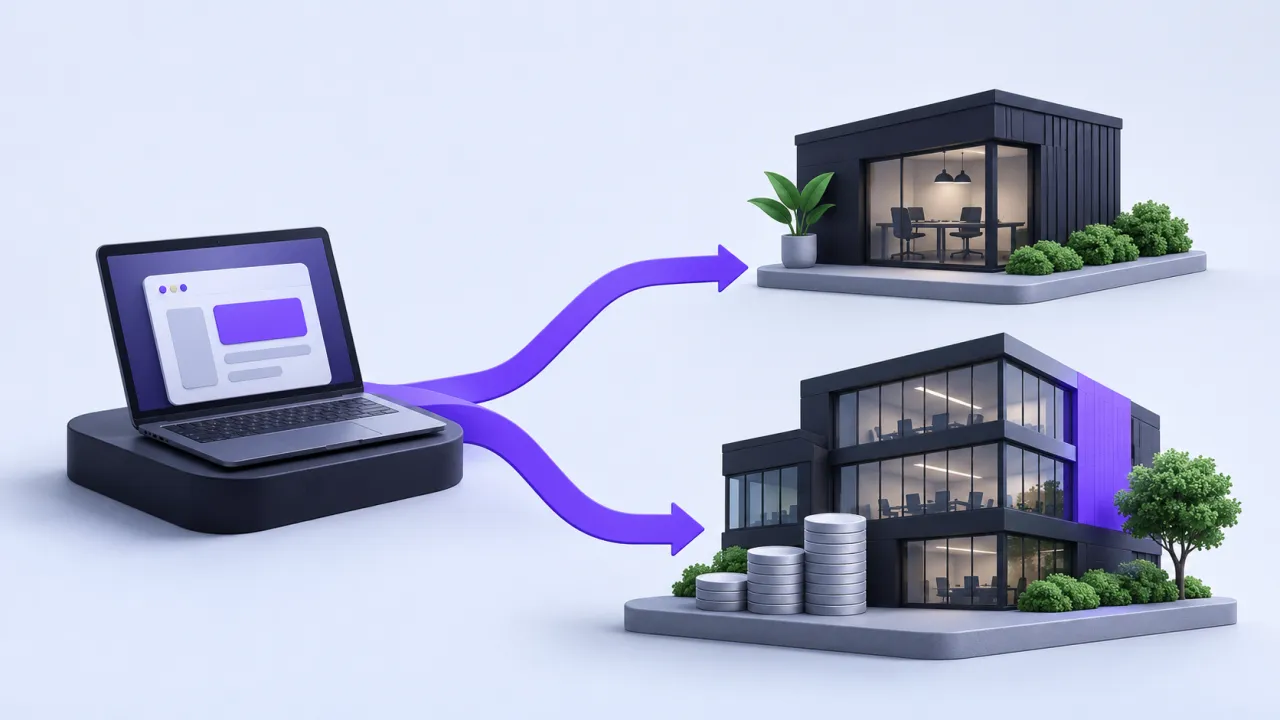
Bootstrapping and venture funding support different operating choices. A software studio with service revenue and an owned product may not need the same financing path as a company pursuing rapid product expansion. Start with the capital required, the growth model and the obligations each path introduces.
The contract to define first
Build scenarios for customer-funded development, reinvested service margin and external equity. Make assumptions about delivery capacity, product focus and sales cycles visible. Fundraising is itself work and does not guarantee capital. A technical team should understand which milestones the financing is meant to support rather than treating funding as a substitute for a clear product strategy.
A worked scenario
A hypothetical studio can fund a narrow product release from paid delivery work, but doing so reduces time available for both customers and the product. External financing might change that constraint while adding investor expectations. Compare the actual operating tradeoff instead of declaring one route universally superior.
An implementation and review sequence
- Estimate the capital needed for a specific milestone
- Compare funding paths using explicit operating scenarios
- Discuss terms and obligations with qualified advisors
Failure cases worth testing
| Condition or input | Expected behavior |
|---|---|
| Service work funds the product | Capacity and opportunity costs are included |
| Fundraising takes longer than expected | The operating plan has a contingency |
| A funding scenario depends on approval | It remains conditional rather than committed cash |
Download the illustrative acceptance checklist (JSON)
Tradeoffs and limits
Financing terms, tax effects and legal obligations require qualified advice. This framework organizes product and operating questions; it is not a recommendation to buy, sell or enter a particular investment.
Use the result to make a decision
The practical output is straightforward: compare capital needs control and product timelines with scenarios. Keep the assumptions with the artifact so a product owner, implementer or prospective partner can review the same decision. A useful handoff states the supported scope, the evidence collected and the remaining dependency instead of treating a successful demonstration as proof of every operating condition.
Continue with related implementation detail
Related guide: Design partners for B2B SaaS: a pilot with a decision at the end
MVP evidence investors can inspect
Startup technical data room checklist
References and current platform requirements
Platform capabilities, programme terms and access conditions can change. Check the linked primary references against the version and account you actually use; the patterns above do not establish a provider approval, certification or universal compatibility guarantee.
Discuss the workflow
Discuss the product scope and post-credit operating assumptions; AptixLabs does not guarantee grants or funding.
Explore the relevant AptixLabs service
How should a studio compare bootstrapping and VC funding?
Bootstrapping and venture funding support different operating choices. Financing terms, tax effects and legal obligations require qualified advice.
Which failure cases should be included in the review?
Include these explicit cases: Service work funds the product: capacity and opportunity costs are included; Fundraising takes longer than expected: the operating plan has a contingency; A funding scenario depends on approval: it remains conditional rather than committed cash.