
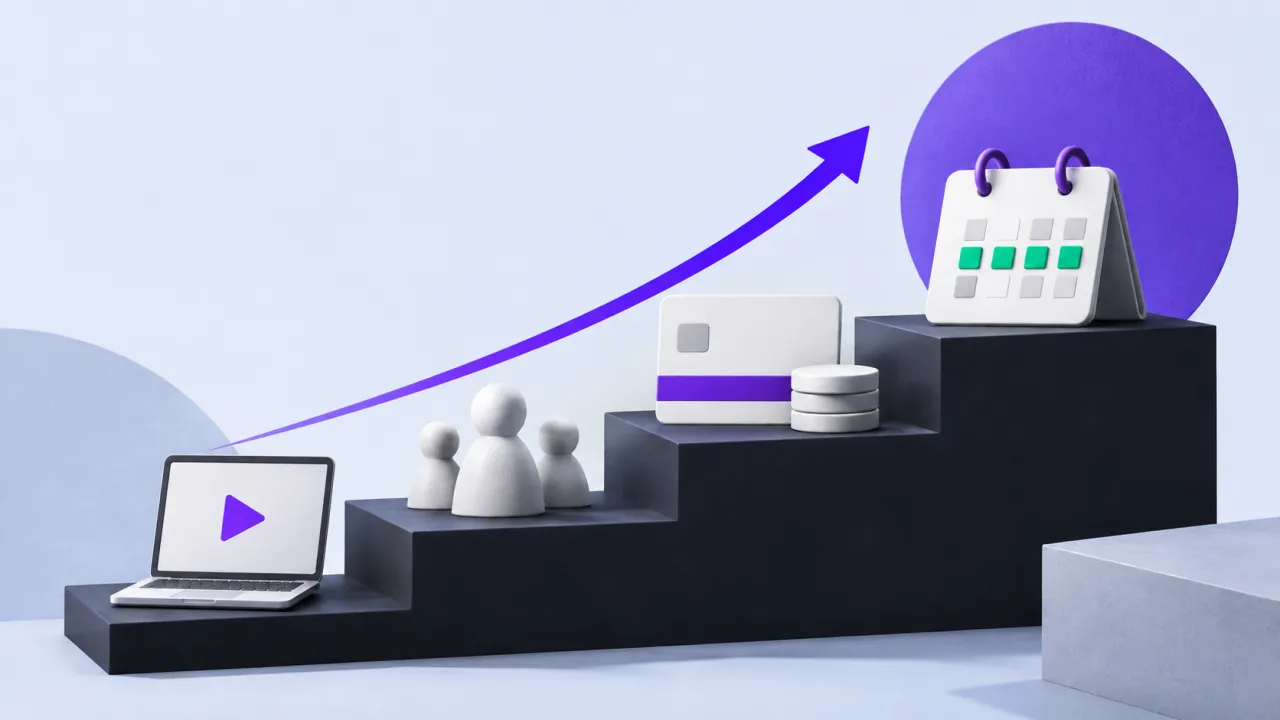
Investors can inspect more than a polished demo. Activation definitions, retention cohorts, paid usage and support evidence help distinguish an interesting prototype from a product people repeatedly use. Present the evidence at its real stage and keep downloads, accounts, active users and customers separate.
The contract to define first
Create a small proof pack with definitions, date ranges and source systems. Show the product workflow, the user behavior being measured and the limitations of the sample. Separate test accounts and internal activity. A technical artifact such as an integration trace can demonstrate feasibility, but it does not establish market demand or a sustainable acquisition channel.
A worked scenario
A hypothetical app has many installs but a much smaller group completing the first meaningful workflow. A useful discussion shows both numbers and the activation definition. Hiding the denominator behind a headline install count makes the evidence less credible, even if the underlying product work is strong.
An implementation and review sequence
- Define each traction metric and its denominator
- Preserve source dates and exclude internal tests
- Connect product evidence to the next learning milestone
Failure cases worth testing
| Condition or input | Expected behavior |
|---|---|
| A demo succeeds once | It is feasibility evidence rather than retention |
| A user installs but never activates | The metrics remain separate |
| A cohort is small | Its uncertainty is visible |
Download the illustrative acceptance checklist (JSON)
Tradeoffs and limits
Early products may not have stable retention or revenue data. Use the available evidence honestly and identify the next learning milestone instead of inventing a benchmark to appear mature.
Use the result to make a decision
The practical output is straightforward: separate demos activation retention and paying accounts in a proof pack. Keep the assumptions with the artifact so a product owner, implementer or prospective partner can review the same decision. A useful handoff states the supported scope, the evidence collected and the remaining dependency instead of treating a successful demonstration as proof of every operating condition.
Continue with related implementation detail
Related guide: Scope an MVP around one complete customer workflow.
AI SaaS gross margin after credits
Bootstrap versus VC for software studios
References and current platform requirements
Platform capabilities, programme terms and access conditions can change. Check the linked primary references against the version and account you actually use; the patterns above do not establish a provider approval, certification or universal compatibility guarantee.
Discuss the workflow
Discuss the product scope and post-credit operating assumptions; AptixLabs does not guarantee grants or funding.
Explore the relevant AptixLabs service
What MVP evidence can investors actually inspect?
Investors can inspect more than a polished demo. Early products may not have stable retention or revenue data.
Which failure cases should be included in the review?
Include these explicit cases: A demo succeeds once: it is feasibility evidence rather than retention; A user installs but never activates: the metrics remain separate; A cohort is small: its uncertainty is visible.