
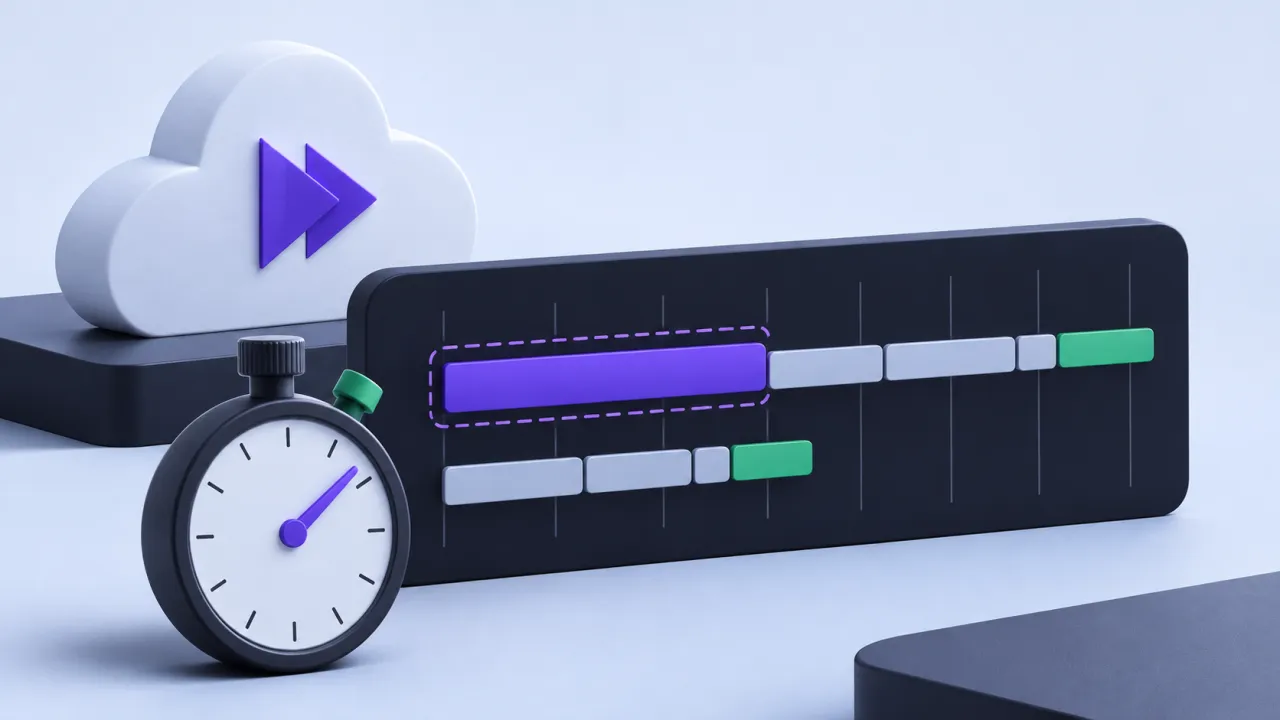
A slow Cloud Run request is not automatically a cold start. It may include application initialization, database connection setup, model loading or an external API delay. Measure the request path before changing minimum instances or allocating more resources, and report the conditions behind each sample.
The contract to define first
Separate instance startup from per-request work using timestamps and traces. Compare warm and cold candidates under a controlled revision and workload, then test the effect of one configuration change at a time. Keep HTTP fetch timing, browser page load and user-perceived latency separate. A fast backend response does not establish a fast rendered page.
A worked scenario
A synthetic endpoint is slow on the first request because it initializes a dependency lazily. Pre-initialization may shift that time into startup rather than eliminate it. Measure both readiness and request latency before claiming the application became faster.
An implementation and review sequence
- Trace startup dependency initialization and request handling separately
- Compare samples under recorded revision and load conditions
- Change one configuration variable and repeat the experiment
Failure cases worth testing
| Condition or input | Expected behavior |
|---|---|
| A warm request is still slow | Investigate dependencies rather than blaming startup |
| A revision changes initialization | Record the new readiness behavior |
| Minimum instances increase | Evaluate both latency distribution and operating cost |
Download the illustrative acceptance checklist (JSON)
Tradeoffs and limits
Keeping instances warm can reduce some startup exposure while increasing baseline cost. The right configuration depends on latency requirements, traffic shape and the rest of the request path.
Use the result to make a decision
The practical output is straightforward: separate instance startup from dependency and application latency. Keep the assumptions with the artifact so a product owner, implementer or prospective partner can review the same decision. A useful handoff states the supported scope, the evidence collected and the remaining dependency instead of treating a successful demonstration as proof of every operating condition.
Continue with related implementation detail
Related guide: Budget AI features per completed task.
Database connection pooling on Cloud Run
FastAPI background jobs versus task queues
References and current platform requirements
Google Cloud: Cloud Run instance autoscaling
The linked references provide platform or process context. The worked scenario and acceptance matrix are original examples; adapt them to the actual product, supported environment and documented responsibilities.
Discuss the workflow
Discuss one reliability bottleneck, its impact, and a measurable acceptance task.
Explore the relevant AptixLabs service
How can you distinguish a cold start from other latency?
A slow Cloud Run request is not automatically a cold start. Keeping instances warm can reduce some startup exposure while increasing baseline cost.
Which failure cases should be included in the review?
Include these explicit cases: A warm request is still slow: investigate dependencies rather than blaming startup; A revision changes initialization: record the new readiness behavior; Minimum instances increase: evaluate both latency distribution and operating cost.