
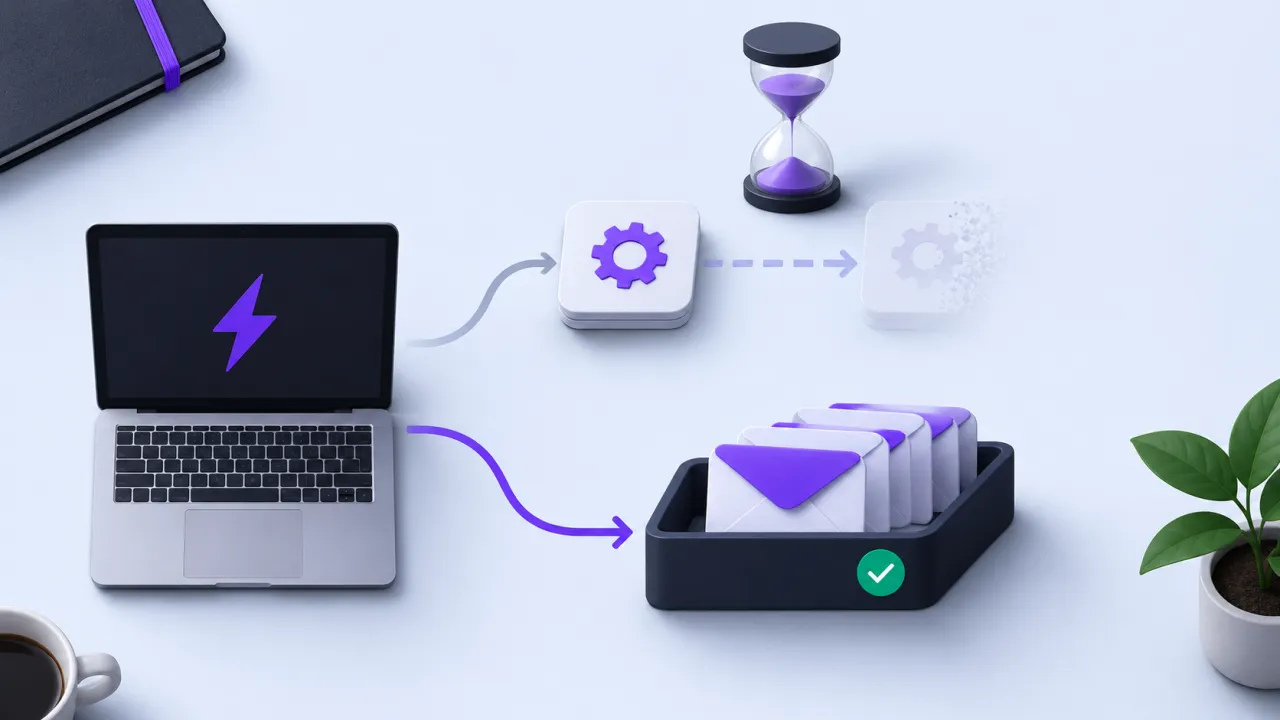
FastAPI background tasks and a durable task queue provide different lifecycle guarantees. Work attached to an application process may be suitable for a small best-effort action, but a process restart can interrupt it. Choose based on whether the business can tolerate losing the task and how completion will be observed.
The contract to define first
Define persistence, retry, ordering and duplicate-execution requirements before selecting a queue. A durable message does not guarantee exactly-once side effects; workers still need idempotency and recovery behavior. Store an operation identity and expose a status when the user needs to know whether work completed. Avoid keeping critical work invisible behind an immediate success response.
A worked scenario
A synthetic report export takes longer than the request should remain open. The API can accept an export job and return its identity. A worker produces the result, updates status and handles retries without generating an unlimited number of duplicate files.
An implementation and review sequence
- Classify work by loss tolerance and retry needs
- Persist a job identity before acknowledging durable work
- Test process restarts and duplicate delivery
Failure cases worth testing
| Condition or input | Expected behavior |
|---|---|
| Worker stops midway | The job has a documented recovery path |
| Message is delivered twice | The side effect remains controlled |
| The task fails permanently | The user or operator can identify the failed operation |
Download the illustrative acceptance checklist (JSON)
Tradeoffs and limits
A managed queue adds infrastructure and monitoring responsibilities. For a noncritical task with an acceptable loss policy, a simpler process-bound mechanism may be a deliberate choice.
Use the result to make a decision
The practical output is straightforward: compare lifecycle guarantees using a process-restart experiment. Keep the assumptions with the artifact so a product owner, implementer or prospective partner can review the same decision. A useful handoff states the supported scope, the evidence collected and the remaining dependency instead of treating a successful demonstration as proof of every operating condition.
Continue with related implementation detail
Related guide: Trace one user action across client, API and background work.
Cloud Run cold start measurement
Firestore security rules regression tests
References and current platform requirements
The linked references provide platform or process context. The worked scenario and acceptance matrix are original examples; adapt them to the actual product, supported environment and documented responsibilities.
Discuss the workflow
Discuss one reliability bottleneck, its impact, and a measurable acceptance task.
Explore the relevant AptixLabs service
When does a FastAPI task need a durable queue?
FastAPI background tasks and a durable task queue provide different lifecycle guarantees. A managed queue adds infrastructure and monitoring responsibilities.
Which failure cases should be included in the review?
Include these explicit cases: Worker stops midway: the job has a documented recovery path; Message is delivered twice: the side effect remains controlled; The task fails permanently: the user or operator can identify the failed operation.