
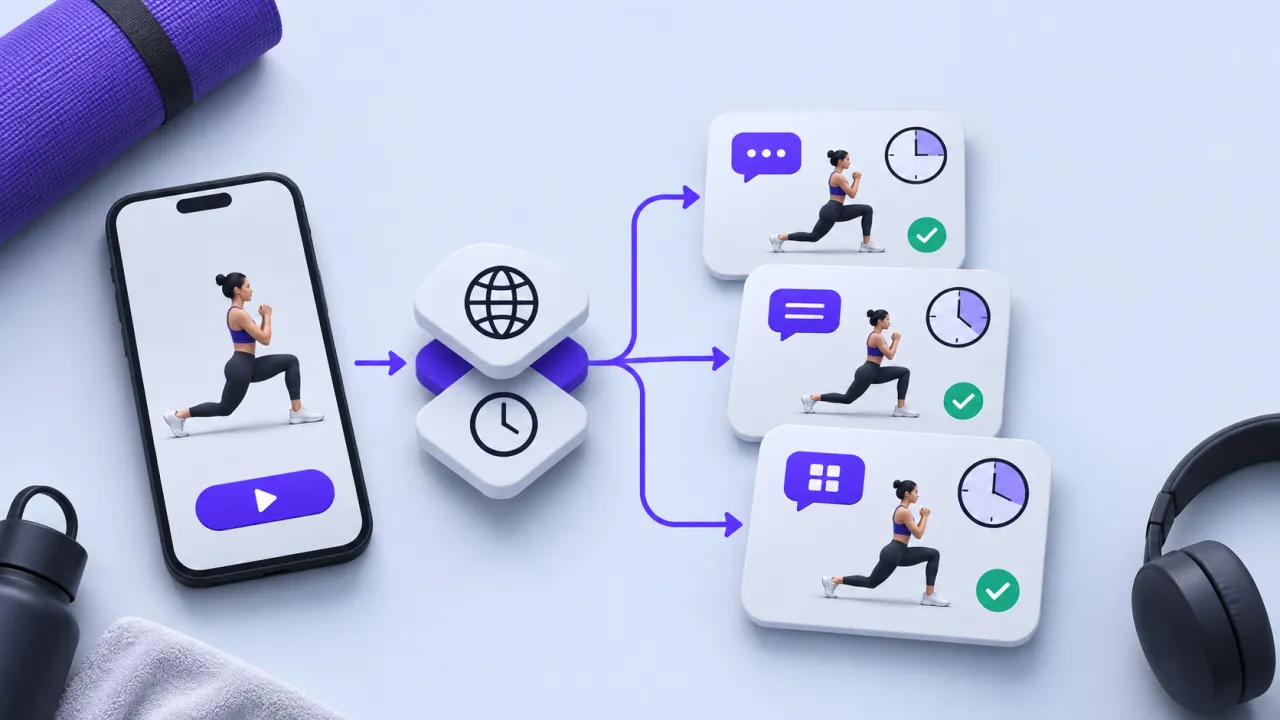
Internationalization for a fitness product includes more than translating labels. Units, date formats, timezones, text length and content responsibility can change how a plan or health value is understood. Separate those concerns so a language change does not accidentally alter the underlying measurement.
The contract to define first
Store canonical values and convert presentation deliberately. Keep user preferences for units separate from locale where the product needs that distinction. Test pluralization, longer text and right-to-left behavior if supported. Exercise and nutrition content may require its own editorial review rather than automatic word substitution.
A worked scenario
A synthetic user prefers kilograms while using an English locale and traveling across timezones. The app should preserve the recorded load and session identity while formatting the display appropriately. Switching the unit preference should not repeatedly convert and overwrite the canonical measurement.
An implementation and review sequence
- Separate canonical data from localized presentation
- Define unit language and timezone preferences independently
- Test realistic text lengths and measurement round trips
Failure cases worth testing
| Condition or input | Expected behavior |
|---|---|
| Unit preference changes | Canonical measurements are preserved |
| Translation is longer | Primary controls remain usable |
| A locale is unsupported | The fallback is deliberate and understandable |
Download the illustrative acceptance checklist (JSON)
Tradeoffs and limits
Supporting more locales adds testing and content maintenance. Start with markets the team can support well and document which content remains untranslated or unsupported.
Use the result to make a decision
The practical output is straightforward: scope units languages timezones and content responsibility separately. Keep the assumptions with the artifact so a product owner, implementer or prospective partner can review the same decision. A useful handoff states the supported scope, the evidence collected and the remaining dependency instead of treating a successful demonstration as proof of every operating condition.
Continue with related implementation detail
Related guide: Building UltraFit360: the app, coach portal and shared backend
B2B SaaS accessibility procurement
API integration feasibility checklist
References and current platform requirements
thoughtbot: customer discovery
The linked references provide platform or process context. The worked scenario and acceptance matrix are original examples; adapt them to the actual product, supported environment and documented responsibilities.
Discuss the workflow
Bring one customer workflow and its constraints to define a reviewable discovery scope.
Explore the relevant AptixLabs service
How should localization preserve measurement meaning?
Internationalization for a fitness product includes more than translating labels. Supporting more locales adds testing and content maintenance.
Which failure cases should be included in the review?
Include these explicit cases: Unit preference changes: canonical measurements are preserved; Translation is longer: primary controls remain usable; A locale is unsupported: the fallback is deliberate and understandable.